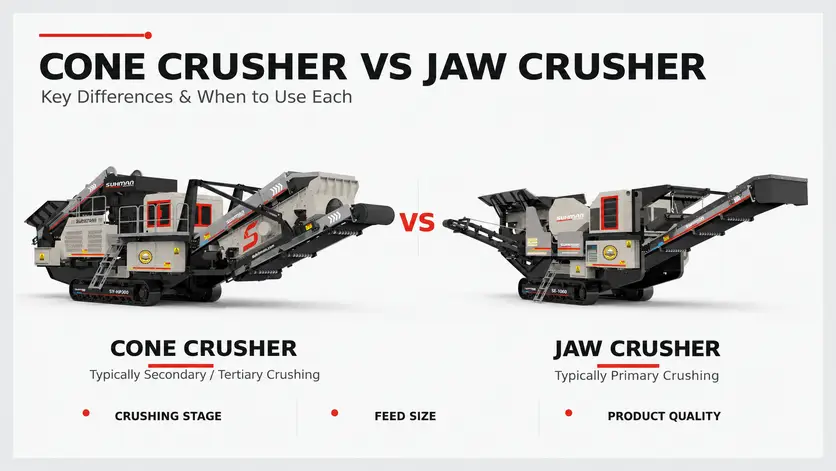
The main difference between a cone crusher and a jaw crusher is their usual role in the crushing process. A jaw crusher typically breaks large feed at the primary stage. A cone crusher usually handles secondary or tertiary crushing, reducing smaller feed further. Both use compression, and hard-rock plants often use them together. Metso’s crusher selection guide explains these common stage assignments.
For a quarry operator, the decision starts with two questions: what material enters the plant, and what product must leave it? Those answers help determine whether you need a jaw, a cone, or a combination with screening.
Cone Crusher vs Jaw Crusher: At a Glance
| Selection factor | Jaw crusher | Cone crusher |
|---|---|---|
| Typical stage | Primary crushing; sometimes secondary | Secondary or tertiary crushing |
| Crushing action | Moving jaw compresses rock against a fixed jaw | Moving mantle compresses rock against a stationary bowl liner |
| Feed requirement | Common choice for large incoming rock | Feed must suit the selected chamber and opening |
| Main production role | Initial size reduction | Further reduction toward the required aggregate sizes |
| Hard, abrasive rock | Suitable in an appropriately selected primary application | Suitable in an appropriately selected downstream application |
| Feeding priority | Control top size and maintain steady delivery | Maintain the recommended chamber level and even feed distribution |
| Main crushing wear parts | Jaw plates and cheek plates | Mantle and bowl liner, also called the concave |
| Main selection question | Can it accept and reduce the incoming feed? | Can it process the prepared feed into the required product? |
This table is a starting point. Model size, chamber choice, feed condition, and the surrounding equipment determine the actual result. The working principles are described in McLanahan’s jaw crusher guide and cone crusher guide.
How Jaw Crushers and Cone Crushers Work
Jaw crusher: compression between two jaws
A jaw crusher has a moving jaw and a fixed jaw that form a narrowing chamber. As the moving jaw closes, it compresses the rock. Broken pieces travel downward and discharge from the bottom.
This arrangement makes the jaw a common starting point for reducing large feed. The SE-1060 mobile jaw crusher is one SUHMAN example designed for primary crushing in quarrying and related applications.
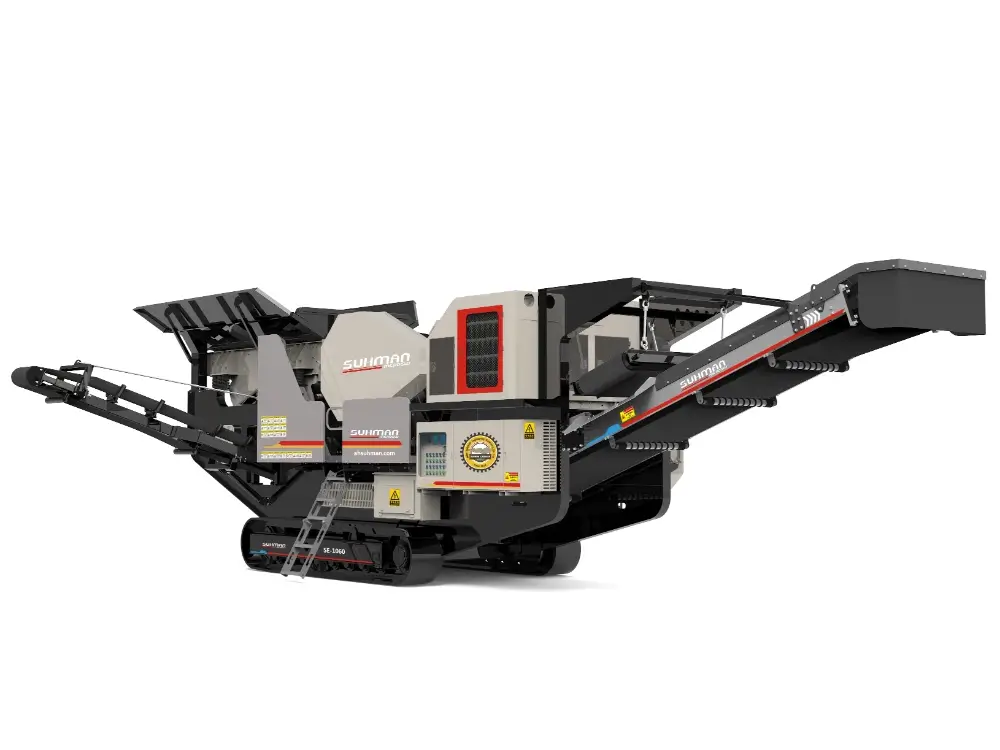
SUHMAN SE-1060 mobile jaw crusher, an example of a primary crushing plant.
Cone crusher: compression around a moving mantle
A cone crusher has a mantle that moves eccentrically inside a stationary bowl liner. The changing gap compresses the feed as it moves through the chamber. Material can also break through pressure between particles.
The SY-HP300 mobile cone crusher is an example of equipment used for further reduction after feed preparation or primary crushing. Its tracked layout packages the crusher with feeding and conveying equipment.
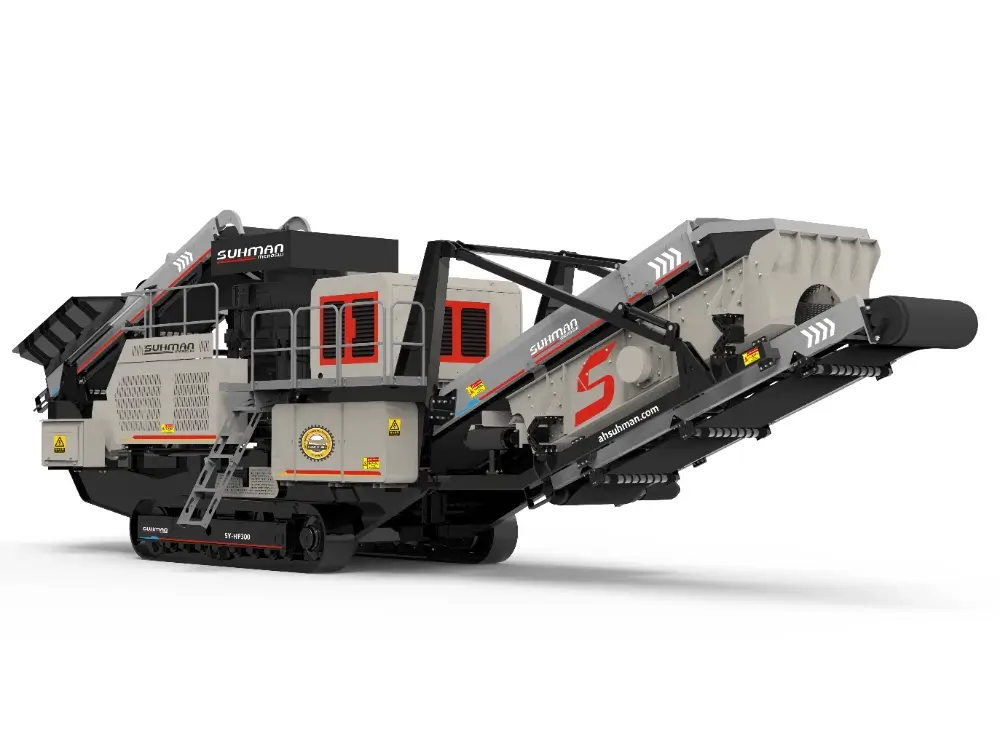
SUHMAN SY-HP300 mobile cone crusher for downstream crushing applications.
Key Differences That Affect Equipment Selection
1. Crushing stage and feed size
A jaw crusher usually receives the larger feed at the start of a line. A cone crusher commonly receives material that has already passed through an earlier stage.
However, a jaw is not compulsory before every cone. Naturally small feed may already suit a cone’s chamber, allowing it to serve as the first crushing stage. This exception is covered in Metso’s guide to crusher types.
For a proposed jaw-and-cone line, ask the supplier to match the jaw’s expected discharge to the cone’s feed requirements. A list of two machine names does not establish that they will work well together.
2. Material hardness, abrasion, and moisture
Both technologies can process hard, abrasive material. Their position in the circuit often matters more than a simple ranking by rock hardness.
Sticky feed needs separate attention. Conventional jaws and cones have limits when clay and moisture cause material to pack or restrict flow. McLanahan distinguishes suitable hard-rock duties from sticky-feed applications in its primary crusher selection guide.
Describe the whole feed stream when requesting a proposal. Include weathered rock, clay, fines, moisture changes, and contamination. Where separation is needed before crushing, our scalping screen guide explains the role of preliminary screening. Heavy clay contamination may require additional treatment.
3. Product size and particle shape
Jaw crushing provides initial reduction. Cone crushing can take the material further toward the required sizes and shape, provided the chamber, feed, and operating conditions suit the task.
The closed side setting (CSS) is the smallest discharge gap during the crushing cycle. It influences the size distribution, but it is not a screen aperture or a guarantee that every discharged particle is smaller than that gap. McLanahan’s cone crusher operating guidance describes how settings affect both product size and throughput.
A screen separates the resulting size fractions. In a closed circuit, oversize returns for further crushing. Define grading and shape requirements separately; our guide to crushed stone and gravel sizes explains common product distinctions.
4. Feed control and chamber selection
Steady feeding matters for both machines. Cone performance is particularly sensitive to the relationship between feed grading, chamber profile, and operating setting.
Choose a chamber that matches the actual feed. Follow the manufacturer’s guidance on choke feeding, which maintains a controlled bed of material in the chamber. Feed distribution also matters: uneven loading can lead to uneven wear. See McLanahan’s cone liner selection guide for the connection between feed and liner choice.
During plant planning, ask how the cone will receive a steady supply when the upstream loading rate changes. Include the proposed feeder, buffer capacity, and controls in that discussion.
5. Wear parts and maintenance
Jaw maintenance includes the condition of jaw plates and cheek plates, along with bearings, lubrication, and the adjustment system. Our jaw crusher maintenance guide explains common wear and failure points.
Cone maintenance includes the mantle and bowl liner, lubrication, and the model’s hydraulic and adjustment systems. Uneven feed, unsuitable liners, and contaminated oil can affect reliability. The cone crusher maintenance guide covers these issues in more detail.
For either machine, request a maintenance plan tied to the proposed duty. Include parts availability, replacement access, lifting requirements, and expected shutdown time. A wear-life estimate should state the material, operating conditions, and replacement criteria behind it.
When Should You Choose a Jaw Crusher?
Start by evaluating a jaw crusher when the main task is to accept large incoming pieces and prepare them for downstream processing. This is a common requirement in quarrying, mining, and some recycling operations.
Your selection brief should explain:
- The largest expected pieces and how often they occur.
- The required throughput at the primary stage.
- The discharge needed by the next machine.
- Whether the plant will stay in place or move between sites.
For mobile projects, the mobile jaw crusher selection guide also covers transport, installation, and ownership considerations.
A jaw may be enough for a particular coarse product if the crushed and screened material meets the customer’s specification. Confirm this with representative material and product checks before deciding that another crushing stage is unnecessary.
When Should You Choose a Cone Crusher?
Evaluate a cone crusher when the feed is already suitable for its chamber and your project needs further reduction, especially in hard-rock aggregate production.
Prepare a clear specification for the cone stage: incoming grading, desired product sizes, required output, and the amount of material returning from the screen. These details give the supplier a basis for selecting the chamber and operating range. Metso’s chamber selection guidance explains why the application and liner profile need to match.
If an impact crusher is also under consideration, our impact crusher vs jaw crusher comparison provides context on impact crushing, material suitability, and product requirements.
When Do You Need Both Crushers?
A jaw-and-cone combination is worth evaluating when large incoming rock must become smaller, screened aggregate. Each stage has a defined job:
- Primary jaw crushing: reduce incoming rock to feed suitable for the next stage.
- Secondary cone crushing: reduce the prepared material further.
- Screening: separate the required product fractions and identify oversize for return where the circuit includes recirculation.
This is a simplified process. Actual layouts may include preliminary screening, intermediate storage, or an additional crushing stage.
Example: a granite aggregate plant in Guangdong
SUHMAN’s Guangdong granite aggregate project combines an SE-1060 mobile jaw crusher, an SY-HP300 mobile cone crusher, and an SS-7018 mobile screening plant.
The project page reports 200–220 tonnes per hour under its granite operating conditions. This is a project-specific result, not a capacity guarantee for every installation using those models.
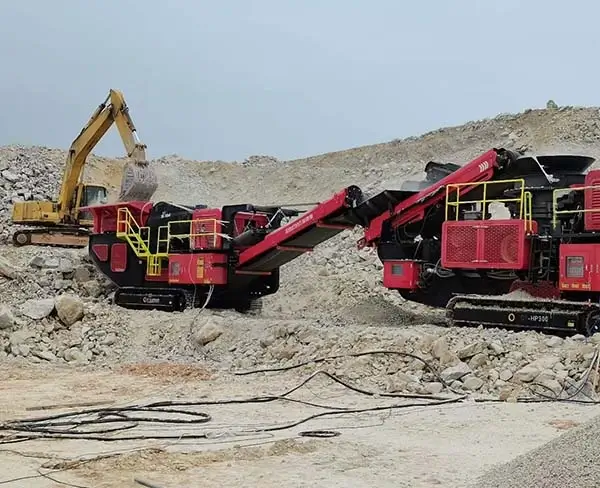
Granite processing in Guangdong: a project that combines jaw crushing, cone crushing, and screening.
For your project, request an equipment layout showing the material flow between stages. Ask where the finished product leaves the circuit and where the oversize returns. This makes the proposed division of work easier to assess.
How to Compare Costs for Your Project
There is no universal price or operating-cost winner between a jaw crusher and a cone crusher. They often perform different duties, so comparing two purchase prices alone leaves much of the project unexamined.
Ask suppliers to price the complete arrangement needed to make your specified product. Use one shared brief so each proposal addresses the same feed, operating schedule, and finished output.
| Cost or performance item | What to ask for |
|---|---|
| Equipment scope | Crushers, feeders, screens, conveyors, controls, and required supporting equipment |
| Energy | Estimated consumption under the stated duty and available power supply |
| Wear parts | Part prices, expected service life assumptions, and replacement labor |
| Maintenance | Planned service work, access requirements, and spare-parts lead times |
| Plant output | Expected saleable tonnes per hour in each required size fraction |
| Recirculation | Estimated return load and its effect on available plant capacity |
| Installation and movement | Transport, setup, foundations where needed, and relocation costs |
A useful operating measure is
Operating cost per saleable tonne = operating expenses over a period ÷ saleable tonnes produced during that period.
Use the same expense categories and product acceptance criteria for every option. Keep financing or depreciation separate, or include them consistently in a fuller ownership calculation.
Also distinguish fresh feed from material circulating through the plant. Counting returned oversize again as finished production would inflate the apparent output. Ask for a mass balance showing fresh feed, recirculation, and saleable products.
Treat a proposal as a set of assumptions to verify. If the feed becomes wetter, the product mix changes, or a screen limits throughput, ask how the expected result changes. This comparison method helps you judge the complete operation.
Plan the Crushing Line Around Your Product
Before requesting a configuration, gather your material description, available test results, maximum feed size, target grading, required saleable output, and site conditions. Include existing equipment so the proposal can account for the whole process.
Whether you are replacing one machine or planning a new line, contact SUHMAN to discuss your crushing project. A clear production brief helps the team assess primary crushing, cone crushing, screening, and the connections between them.
FAQs
Can a cone crusher replace a jaw crusher?
It depends on the duty. A cone generally needs feed suited to its chamber. Replacing a primary jaw is only a practical option if the incoming material can already meet those requirements and the proposed cone can deliver the required result.
Do you always need a jaw crusher before a cone crusher?
No. Feed may already be small enough, or another machine may provide primary reduction. Check the actual feed grading and the cone manufacturer’s limits before deciding on the layout.
Which crusher is suitable for granite and basalt?
Both can have a role. A jaw commonly handles large primary feed, while a cone provides further reduction. Confirm the material’s properties, required product, and wear expectations for the specific source.
Can a jaw crusher produce finished aggregate?
Yes, when its output, after any required screening, meets the buyer’s specification. Further crushing may be needed for smaller sizes or more demanding shape requirements. Product testing should guide that decision.
What affects the operating cost of each crusher?
Material properties, feed preparation, settings, energy use, wear, maintenance, and productive operating time all matter. Compare costs against accepted finished tonnes from the complete plant, using the same assumptions for each proposal.