Introduction
Jaw crushers are simple machines in principle. But in real working conditions, small problems can quickly become expensive downtime.
Most jaw crusher maintenance problems stem from a few key areas: worn jaw plates, stuck liners, loose or damaged toggle parts, bearing problems, poor lubrication, incorrect CSS, and poor feed conditions. Besides, many operators are not only worried about the part price. They are also worried about fit, replacement time, machine access, manual availability, and spare parts availability. (Heavy Equipment Forums)
This guide explains the most common jaw crusher parts failures and how to maintain them. It is written for quarry operators, recycling contractors, maintenance teams, and buyers who need to keep a jaw crusher running with less downtime.
1. Jaw Plates and Jaw Liners Wear
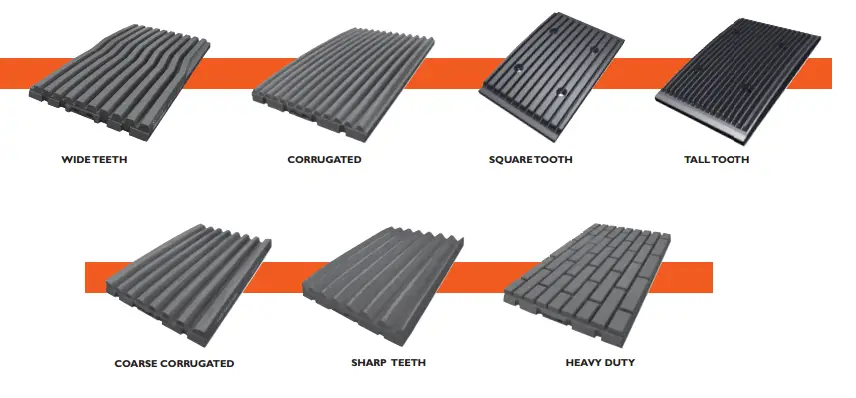
Jaw plates are the main wear parts inside a jaw crusher. They are also called jaw dies or jaw liners. A jaw crusher usually has one fixed jaw plate and one movable jaw plate.
These parts crush the rock, concrete, or other material directly. So they wear faster than most structural parts.
Common signs of jaw plate wear include:
- The teeth become flat.
- The output size becomes larger.
- The crusher needs more adjustment.
- Capacity drops.
- The chamber does not grip material well.
- The jaw plate wears unevenly.
- The liner becomes difficult to remove.
In real maintenance work, jaw plate problems are not always caused by complete wear-out. Sometimes a liner still has usable life, but it becomes difficult to remove because of packed material, worn seating areas, or locking pressure inside the chamber. This creates the same result as a failed part: the crusher stays down until the liner can be removed safely. This is why jaw plate maintenance should include both wear tracking and replacement preparation.
In one heavy equipment forum’s case, a user had a Nordberg C63 jaw liner that was stuck even after the retainers were removed. The user said the liner still had about 50% life remaining, but it could not be removed easily. (Heavy Equipment Forums)
A maintenance discussion on SMRP Exchange also supports condition-based liner tracking. One user tracked liner work by tons and measured thickness during shutdowns. Some users suggested that tonnage per side and thickness measurement are useful, and that motor current can also help show if the crusher is working harder than normal. (exchange.smrp.org)
Maintenance Tips
Check jaw plates on a fixed schedule. Do not rely only on visual checks from the top of the chamber. Some worn areas may not be easy to see.
Track these points:
- Tons processed per liner side
- Jaw plate thickness
- Tooth profile
- Output size
- CSS changes
- Motor current
- Uneven wear between fixed and movable jaws
Replace or flip jaw plates before they become too thin. Pit & Quarry also warns against running jaw dies too long because they may become too thin to flip, which wastes part of the usable wear material. (Pit & Quarry)
Also check the wedges, bolts, and liner seats when replacing jaw plates. A new liner will not work well if the contact area or fixing hardware is damaged.
2. Stuck Jaw Liners and Difficult Replacement
A stuck jaw liner can create a serious shutdown problem. The part may still have usable wear life, but the machine cannot return to work until the liner is removed or secured correctly.
This problem can come from packed material, corrosion, worn seats, damaged wedges, or poor access around the crusher chamber. The public forum case about the stuck Nordberg C63 liner is a good example. The operator had already removed the retainers and cleared debris, but the liner still would not come loose. (Heavy Equipment Forums)
Kleemann also explains that jaw replacement can be time-consuming and physically demanding. The article on jaw tool changes says safe access, locking systems, and easier handling can reduce downtime and improve user safety. (Wirtgen Group)
Maintenance Tips
Before liner replacement, prepare the machine and tools properly.
Check:
- Retainer bolts
- Wedges
- Hook bars or locking parts
- Liner seat surfaces
- Packed material around the liner
- Access platforms
- Lifting points
- Manufacturer instructions
Do not treat stuck liners as a normal hammering job. Jaw liners are heavy parts. Follow the machine manual and site safety rules. Use proper lifting tools and lockout procedures.
For buyers, this also means one thing: when choosing jaw crusher parts, fit and replacement design matter. A cheaper liner is not really cheaper if it causes longer shutdown times.
3. Cheek Plate Wear
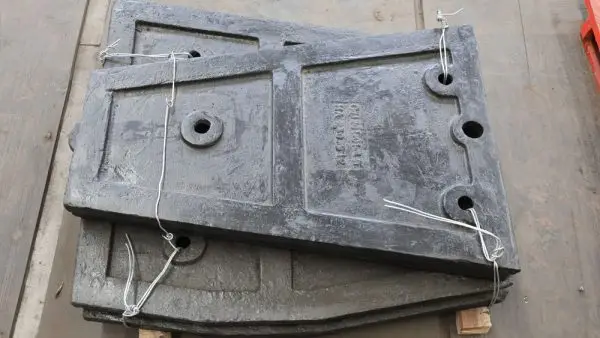
Cheek plates protect the side walls of the crushing chamber. They do not crush material in the same way as jaw plates, but they still receive abrasion from feed material.
If cheek plates are ignored, the material can start wearing the crusher frame. That repair is much more serious than replacing a cheek plate.
Pit & Quarry recommends checking cheek plates for excessive wear because worn cheek plates can affect the main frame of the jaw crusher. (Pit & Quarry)
Common Problems
- Cheek plates become thin.
- Side bolts loosen.
- Material wears into the side wall.
- Uneven feeding causes one side to wear faster.
Maintenance Tips
Check cheek plates during regular inspections. Tighten bolts as recommended by the manufacturer. Replace cheek plates before they expose or damage the frame.
Also, watch the feed pattern. If material enters the chamber unevenly, it can increase side wear.
4. Toggle Plate Failure
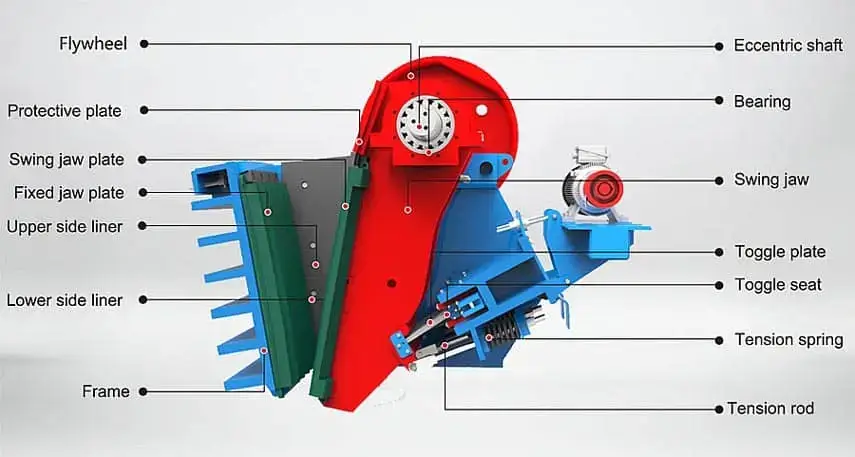
The toggle plate is a key part of many jaw crushers. It transfers force in the crusher mechanism. In older-style crushers, it can also act as a weak link when the crusher receives excessive force.
Pit & Quarry explains that older-style crushers may use a shear toggle as a weak link. If pressure becomes too high, the toggle can bend or break to protect the machine from more expensive damage. (Pit & Quarry)
In real operation, toggle plate problems can show up as:
- Toggle plate cracking
- Toggle plate bending
- Banging or knocking noise
- Loose toggle movement
- The crusher stops after uncrushable material enters
- Frequent toggle replacement
In concrete recycling, you should note that rebar or other bad material can create a risk. A jaw may break a toggle plate if something bad gets into the machine. (Heavy Equipment Forums)
Maintenance Tips
Inspect the toggle plate for cracks, bending, and abnormal contact marks. Do not modify the toggle plate without engineering approval. It may be designed to protect more expensive parts.
Also, check the full toggle system:
- Toggle plate
- Toggle seat
- Tension rod
- Springs
- Toggle beam
- Hydraulic relief system, if fitted
If the toggle plate breaks often, do not only replace the plate. Check the feed material, CSS, toggle seat, and tension system.
5. Toggle Seat, Tension Rod, and Spring Problems
The toggle plate does not work alone. The toggle seat, tension rod, and spring system also need attention.
A Heavy Equipment Forums thread about a Terex Pegson Metrotrak 900×600 shows a user looking for information on toggle rod and spring replacement. Another user replied that changing back to the drawbar and springs solved the toggle plate banging on his crusher. (Heavy Equipment Forums)
These discussions show that noise around the toggle area should not be ignored. A banging toggle plate may point to poor tension, worn seats, or incorrect parts.
Common Problems
- Toggle seat wear
- Toggle plate movement
- Loose or tired springs
- Tension rod fatigue
- Banging noise
- Poor jaw return movement
Maintenance Tips
During shutdown, inspect the toggle seat and contact surfaces. Look for grooves, cracks, or uneven contact. Check the spring and rod condition. Keep the toggle area clean.
Pit & Quarry also recommends washing out toggle seats and plates daily because wet material buildup can become a gritty compound that wears components early. (Pit & Quarry)
Be careful with tension rod and spring assemblies. They may store energy. Do not remove them without following the machine manual and safe lockout procedures.
6. Bearings and Eccentric Shaft Issues
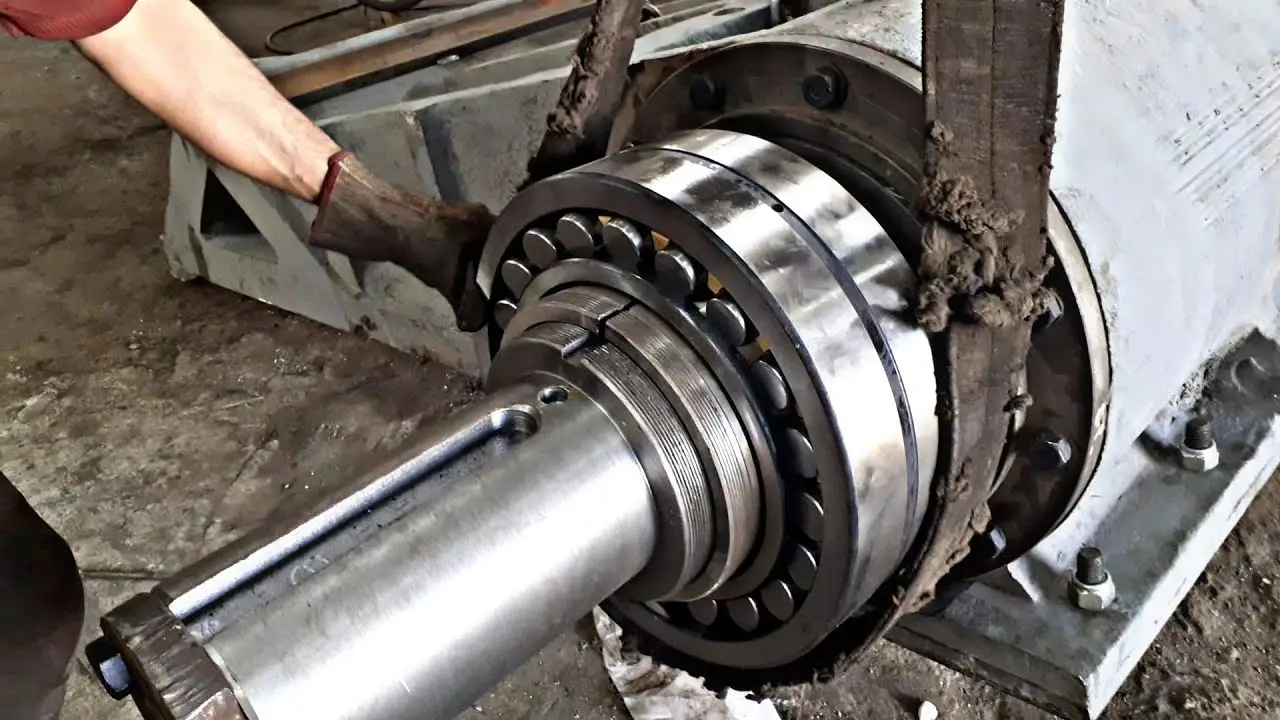
Bearing and shaft problems usually show stronger warning signs than normal wear. A crusher that suddenly locks up, shakes badly after the chamber is cleared, or shows an uneven jaw position should be stopped for inspection. These symptoms may point to bearing damage, shaft misalignment, or structural movement around the pitman and eccentric shaft area. Continuing to run the machine can turn a repairable problem into a major failure.
Bearing problems are not always the most frequent issue, but they can cause serious downtime.
In one heavy equipment forum case, a user reported that a Terex Pegson XA400 jaw locked up and died while crushing concrete. After cleaning the chamber, the machine still shook badly. The user also noticed the jaw sitting crooked in the chamber and suspected a shaft or bearing issue. (Heavy Equipment Forums)
This kind of problem needs careful inspection. A jaw that sits crooked, shakes badly, or hits when the chamber is empty should not be forced back into production.
Common Problems
- Bearing overheating
- Abnormal vibration
- Jaw appears crooked
- Crusher locks up
- Noise from the shaft area
- Shorter coast-down time
- High motor current
Pit & Quarry recommends logging amperage draw because higher-than-normal amperage can signal bearing problems or loose belts. It also recommends logging coast-down time because shorter stopping time may point to bearing problems. (Pit & Quarry)
Maintenance Tips
Check bearing temperature, noise, lubrication, and seals. Keep oil or grease clean. Do not ignore dust contamination.
If vibration changes suddenly, stop and inspect. Check for:
- Bearing damage
- Shaft alignment
- Loose belts
- Damaged flywheel parts
- Loose toggle parts
- Chamber blockage
Bearing and shaft work should be handled by trained personnel. These are critical parts, and wrong repair work can create more damage.
7. Lubrication Failure
Lubrication is one of the simplest maintenance jobs, but it is also one of the easiest to get wrong.
Some operators are not sure which points need grease, which need oil, or how often each point should be serviced
A Reddit user with a new jaw crusher asked what four lubrication bolts were for. Replies discussed whether the points were for oil or grease. One reply said the points were most likely designed for a grease line for easier access and greasing while running. (Reddit)
This shows a real problem: some operators do not always receive clear lubrication instructions. If the lubrication point is unclear, the machine can be under-lubricated or lubricated with the wrong product.
Pit & Quarry also warns that applying the wrong grease is not an option, because this shortcut can lead to equipment failure. (Pit & Quarry)
Common Problems
- Wrong grease or oil
- Dirty grease fittings
- Blocked grease lines
- Over-greasing seals
- Poor lubrication records
- Bearing heat
- Faster wear in pins or toggle areas
Maintenance Tips
Create a clear lubrication chart for the machine. Keep it near the crusher. Mark each lubrication point.
Track:
- Grease type
- Greasing interval
- Bearing temperature
- Grease line condition
- Seal condition
- Oil cleanliness, if the machine uses oil systems
Use the lubricant specified by the manufacturer. Do not use whatever is available on the shelf unless it matches the required specification.
8. Feed Problems That Damage Parts
Many jaw crusher parts problems start before the material reaches the chamber.
Poor feed can cause bridging, uneven wear, low production, and extra stress on the crusher. In a Heavy Equipment Forums discussion, one user explained that keeping the hopper full and maintaining a steady feed helped the machine work better. Another user said dirt in the feed can increase wear, while clean feed improves production and reduces wear. (Heavy Equipment Forums)
Concrete recycling creates extra problems. Rebar can damage belts and create blockages. One Heavy Equipment Forums user warned that long rebar can snag the belt after coming out of the jaw. Another user said that less rebar going into the machine is better, even when the machine has a hydraulic release and a rebar deflector. (Heavy Equipment Forums)
Common Problems
- Uneven feed
- Chamber running empty
- Oversized feed
- Too much dirt or fines
- Wet feed
- Rebar in concrete
- Bridging in the chamber
- Belt damage after crushing
Maintenance Tips
Keep the feed steady and controlled. Do not overload the crusher with material that is too large. Remove dirt and fines where possible.
For concrete recycling:
- Remove rebar before crushing when possible.
- Use magnets where suitable.
- Watch the under-crusher conveyor.
- Keep a belt repair plan ready.
- Check for material buildup under the jaw.
Good feeding reduces stress on jaw plates, toggle parts, belts, and bearings.
9. CSS Problems and Product Size Changes
CSS means closed-side setting. It is the smallest gap between the jaw plates during crushing. CSS has a direct effect on output size.
If jaw plates wear or the adjustment is wrong, the product can become too large. This may cause rework, customer complaints, or extra screening.
In a heavy equipment forum discussion, a user noticed that the output size became too large. Another user asked if CSS was being checked every day and said it should be part of the daily startup. Later in the same discussion, another user described using a foil ball method to confirm CSS and also mentioned a similar lead plug method used by Sandvik. (Heavy Equipment Forums)
Common Problems
- The product becomes too large.
- CSS reading does not match the real output.
- Wedges or adjustment parts wear.
- Jaw plates wear at hidden points.
- Operators set CSS once and forget it.
Maintenance Tips
Check CSS daily during startup. Do not rely only on the adjustment indicator. Confirm the real setting when needed.
Also check:
- Jaw plate wear
- Adjustment wedges
- Hydraulic adjustment system
- Toggle condition
- Feed size
- Product size after the crusher
If output size changes suddenly, inspect the crusher before continuing production.
10. Conveyor Belt and Discharge Area Damage
The conveyor is not inside the jaw chamber, but it is still part of the jaw crusher downtime.
In recycling work, long steel or rebar may leave the crusher with the crushed material and damage the belt. Material can also build up under the jaw and restrict discharge. Once the belt is cut, blocked, or misaligned, the whole plant may have to stop, even if the crusher chamber itself is still working.
A common warning sign is that Heavy Equipment Forums users discussed belt damage, rebar deflectors, magnets, and the need to reduce rebar entering the crusher. (Heavy Equipment Forums)
Common Problems
- Rebar cuts the belt.
- Material builds up under the jaw.
- The belt runs off track.
- Discharge chute plugs.
- Belt flashing wears out.
- Long steel creates a “bird’s nest” under the crusher.
Maintenance Tips
Inspect the discharge area often. Keep material from building up under the jaw. Check belt skirting, scrapers, and flashing.
For recycling jobs, prepare for steel. Use magnets or rebar handling methods when needed. Do not treat the belt as a low-risk part. A damaged belt can stop the whole plant.
11. Missing Manuals and Parts Matching Problems
Parts matching is a real maintenance problem, especially for older mobile jaw crushers. Many delays happen because the maintenance team does not have the correct parts manual, serial-number-specific drawing, or updated part number. A part name alone is not enough. Two crushers with similar model names may use different versions of the same component. This is why serial number confirmation, photos, measurements, and drawings are important before ordering spare parts.
Many maintenance delays are caused by missing information.
A Heavy Equipment Forums user with a Terex Pegson Metrotrak 900×600 said he had great difficulty finding a parts manual. Later in the same thread, the discussion moved to toggle rod and spring replacement. Another user asked for the serial number. (Heavy Equipment Forums)
This is important for parts buyers. The correct part often depends on the exact machine model, year, serial number, and part version.
Common Problems
- No parts manual
- No serial-number-specific drawing
- Wrong aftermarket part
- Old machine with poor support
- Long parts lead time
- No clear installation information
Maintenance Tips
Keep these records ready:
- Crusher brand
- Model
- Serial number
- Year
- Photos of the part
- Old part number
- Measurements
- Application material
- Working hours or tons, if available
Before ordering jaw crusher parts, confirm the fit. Do not rely only on a part name. “Jaw plate” is not enough. The supplier needs the exact machine information.
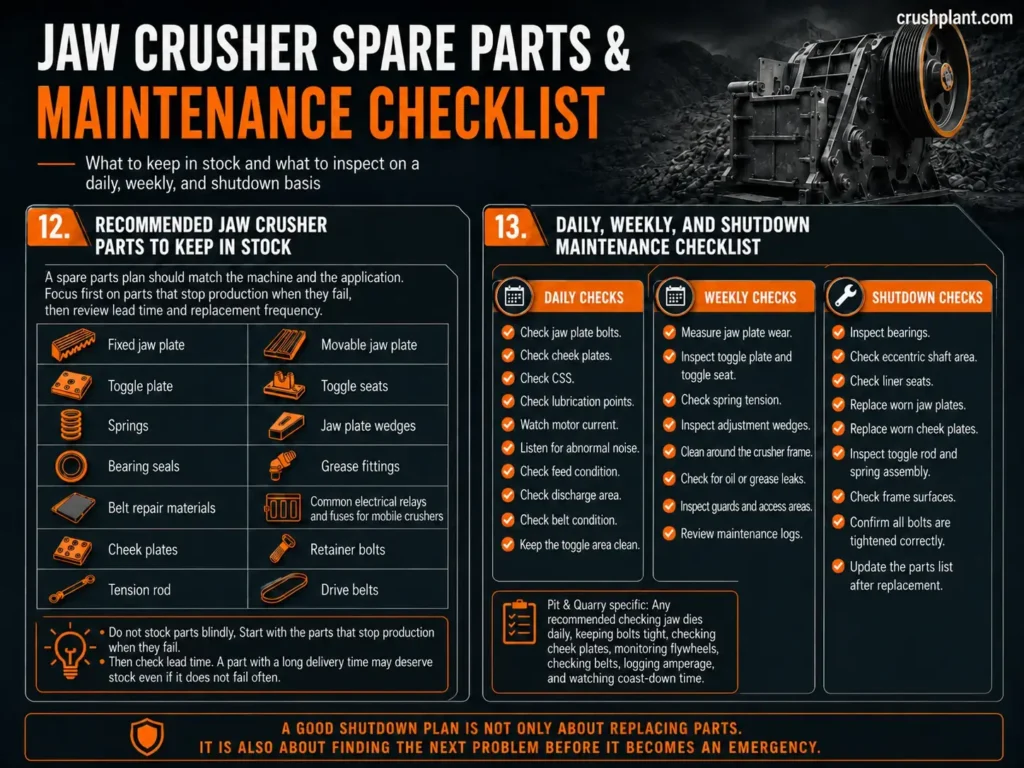
12. Recommended Jaw Crusher Parts to Keep in Stock
A spare parts plan should match the machine and the application. Several parts deserve attention.
Recommended stock items include:
- Fixed jaw plate
- Movable jaw plate
- Cheek plates
- Toggle plate
- Toggle seats
- Tension rod
- Springs
- Jaw plate wedges
- Retainer bolts
- Bearing seals
- Grease fittings
- Drive belts
- Belt repair materials
- Common electrical relays and fuses for mobile crushers
- Parts manual and drawings
Do not stock parts blindly. Start with the parts that stop production when they fail. Then check lead time. A part with a long delivery time may deserve stock even if it does not fail often.
13. Jaw Crusher Daily, Weekly, and Shutdown Maintenance Checklist
Daily Checks
- Check jaw plate bolts.
- Check cheek plates.
- Check CSS.
- Check lubrication points.
- Watch motor current.
- Listen for abnormal noise.
- Check feed condition.
- Check the discharge area.
- Check belt condition.
- Keep the toggle area clean.
Pit & Quarry specifically recommends checking jaw dies daily, keeping bolts tight, checking cheek plates, monitoring flywheels, checking belts, logging amperage, and watching coast-down time. (Pit & Quarry)
Weekly Checks
- Measure jaw plate wear.
- Inspect the toggle plate and toggle seat.
- Check spring tension.
- Inspect adjustment wedges.
- Clean around the crusher frame.
- Check for oil or grease leaks.
- Inspect guards and access areas.
- Review maintenance logs.
Shutdown Checks
- Inspect bearings.
- Check the eccentric shaft area.
- Check the liner seats.
- Replace worn jaw plates.
- Replace worn cheek plates.
- Inspect the toggle rod and spring assembly.
- Check frame surfaces.
- Confirm all bolts are tightened correctly.
- Update the parts list after replacement.
A good shutdown plan is not only about replacing parts. It is also about finding the next problem before it becomes an emergency.
Conclusion
Jaw crusher maintenance is not just about buying new parts.
The real goal is to reduce unplanned downtime. That means tracking jaw plate wear, checking CSS, keeping the toggle area clean, using the correct lubricant, controlling feed material, and preparing the right spare parts before a breakdown happens.
Across real maintenance work, operators often struggle with the same problems: stuck liners, worn jaw plates, toggle noise, bearing concerns, unclear lubrication points, rebar damage, missing manuals, and parts matching. These are practical problems. They need practical maintenance habits. (Heavy Equipment Forums)
For any jaw crusher parts order, the safest starting point is simple: confirm the crusher model, serial number, part name, photos, and working material. Then choose parts that fit correctly, can be replaced safely, and can arrive before downtime becomes expensive.