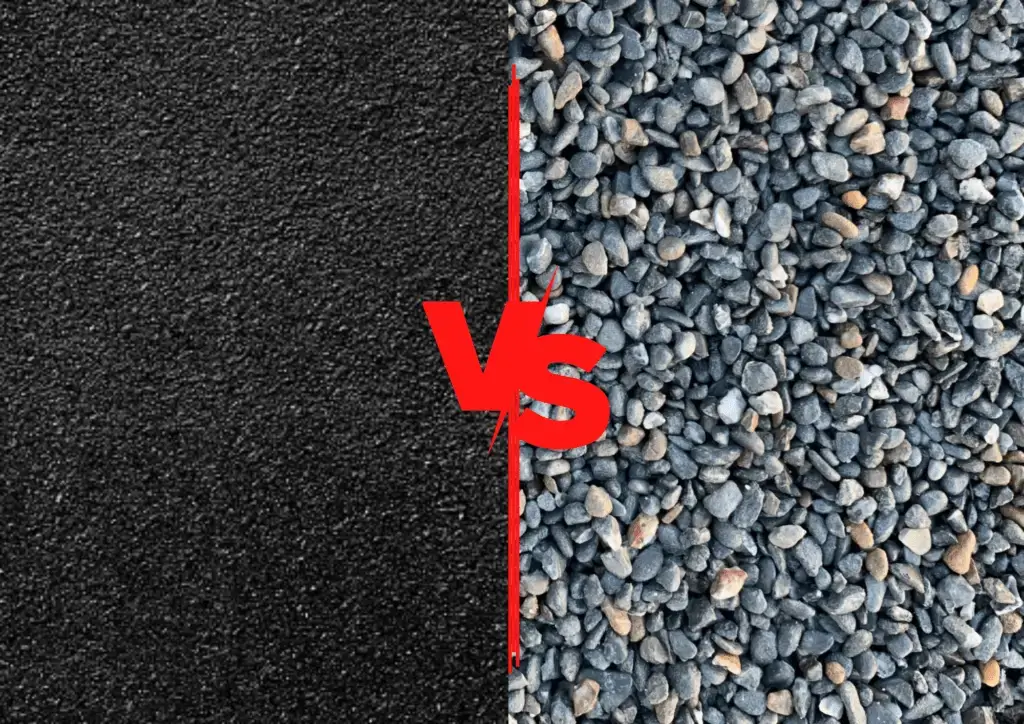
What are Asphalt Millings?
Asphalt millings, or crushed asphalt, are made from recycled pavement. When an old asphalt surface is removed during road resurfacing or driveway reconstruction, it’s ground up into small, reusable pieces.
Common Uses of Asphalt Millings
Asphalt millings are used for driveways, private roads, parking areas, walking paths, base layers under new asphalt, and temporary pothole filling. They’re also used for:
- Erosion control — applied on slopes or places with high water runoff to stabilize the surface while still allowing water to pass through.
- Sub-base material — contractors often use them as a sub-base beneath new asphalt or concrete, improving compaction and reducing the need for virgin aggregate.
- Dust/mud control — for farms, construction sites, or unpaved lots, spreading millings can significantly reduce dust and mud.
What Is Gravel?
Gravel is a broad term covering various types of crushed or naturally occurring rock used in construction, landscaping, and drainage. Unlike asphalt millings, it’s a virgin (new) material quarried from the earth.
Common Uses of Gravel
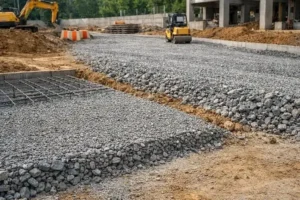
- Driveways — A double-wide driveway (24×50 feet) needs about 24 cubic yards or 34 tons. Crushed stone or road base works best, with total material cost running $600–$1,800 depending on the gravel type.
- Landscaping — pathways, garden beds, borders, and around plants as a weed-suppressing mulch alternative.
- Drainage — pea gravel and river rock are both popular around downspouts, French drains, and water features.
- Sub-base — beneath driveways, patios, and concrete slabs.
Gravel vs. Asphalt Millings
The key difference: gravel stays loose and doesn’t bind together, while asphalt millings harden over time into a more solid surface. Crushed stone and road base are the most affordable gravel options at $20–$35 per ton, which overlaps with millings ($10–$40/ton), but millings often win on cost, especially if you can source them free or cheap from a local contractor.
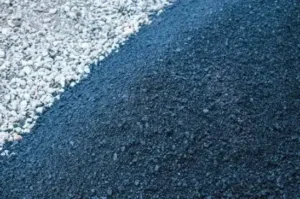
Gravel is generally better for drainage applications, decorative use, and anywhere you want permeability. Millings are better for driveways and roads where you want a solid, asphalt-like surface on a budget.
Asphalt Millings vs. Gravel for Driveways
Durability & Stability
Asphalt millings get stronger and harder over time, making them an ideal choice for driveways that endure heavy traffic. Once compacted, millings create a semi-solid surface that resists shifting, unlike gravel, which can wash away in heavy rain. Potholes and ruts are much less common since the material bonds together.
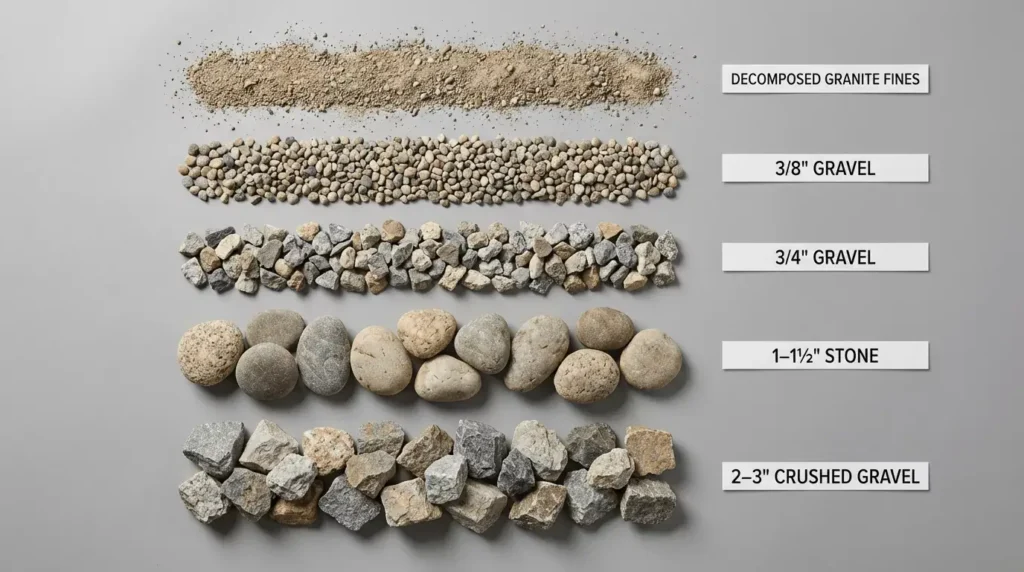
Gravel, on the other hand, doesn’t stay in one place — it scatters over time and reduces the depth of your driveway. Gravel driveways are also more difficult to plow and are prone to getting ruts. In the summer, driving on gravel can stir up dust and debris.
Winner: Asphalt Millings
Cost
Gravel is one of the cheapest options for driveway materials, costing only $0.50 to $3 per square foot with installation. Asphalt millings cost more upfront, with a price tag of up to $5 per square foot including installation. However, gravel, while cheaper to install initially, tends to shift and spread, leading to higher long-term maintenance costs. Asphalt millings may prove more affordable than gravel over time, as they require less maintenance.
Winner: Gravel (upfront), Millings (long-term)
Maintenance
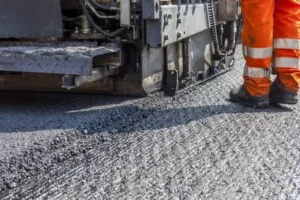
Gravel tends to shift over time, or even disappear due to erosion. Asphalt millings will harden over time and stay put much better than gravel. That also means they are less likely to need to be repaired or replaced in the future — no gravel driveways with deep ruts, and less maintenance than alternatives.
Winner: Asphalt Millings

Appearance
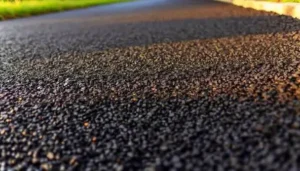
Millings create a smoother, darker finish that looks more like traditional pavement. Gravel has a looser, more rustic look — great for country properties, but not always preferred in suburban neighborhoods. Visually, the rustic charm and versatility of gravel can’t be beat—you can even choose the color of your gravel, while asphalt millings will be limited to the color of the pavement being recycled.
Winner: Depends on your preference
Drainage
Gravel’s loose pebbles allow for good water drainage, so you’ll still get good traction on your driveway even on the rainiest days. Asphalt millings, because the surface is less permeable, are more likely to accumulate standing water, which can get slippery and can also cause rainwater runoff.
Winner: Gravel
Eco-Friendliness
A 2018 report by the National Asphalt Pavement Association found that recycling 101.1 million tons of asphalt millings nationwide saved over 60 million cubic yards of landfill space.
Winner: Asphalt Millings
Traffic Volume
If you’re a property owner with a busy parking lot or facility with heavy truck loading, asphalt millings are the better choice over gravel—their smooth, strong surface can withstand heavy traffic volume. Gravel is not ideal for high and heavy traffic volume areas due to its rocky surface that can damage fast-moving vehicles.
Winner: Asphalt Millings
Bottom Line
The most significant deciding factor is how often your driveway will be in use.
Choose Asphalt Millings if you want a durable, low-maintenance, semi-permanent surface that hardens over time—especially for long driveways, high traffic, or if you’re tired of constantly regrading.
Choose gravel if you want a lower upfront cost, better drainage, more aesthetic variety, or a rustic look—and you don’t mind occasional raking and refilling.
FAQ about Asphalt Millings and Gravel
How much are asphalt millings?
Asphalt millings cost $10–$40 per ton in 2026, sometimes even free from local contractors. A quarter-mile driveway can cost $75,000+ in new asphalt vs. $10,000–$20,000 with millings.
How much is gravel?
Crushed stone costs $25–$40 per ton, pea gravel runs $30–$50 per ton, and river rock ranges from $40 to $75 per ton. Transportation typically adds $10–$20 per ton, depending on distance from the quarry.
Here’s a quick breakdown by type:
Road Base / Crusher Run — Road base is typically the cheapest option at $20–$40 per ton. It’s a blend of crushed stone and stone dust that compacts into an extremely hard surface, making it ideal for driveways and utility areas.
Pea Gravel — Pea gravel remains popular for landscaping projects due to its smooth, rounded texture, ranging from $30–$55 per cubic yard. It’s perfect for pathways, playground surfaces, and decorative borders around plants.
River Rock — River rock is usually very smooth because of the many years spent on the bottom of a river, usually around two inches or smaller in diameter and nicely polished, making it useful for drainage purposes around water features. Expect to pay $45–$140 per cubic yard.
Decorative / Lava Rock — Lava rock runs about $75–$165 per cubic yard. These colorful stones make a wonderful contrast to the mostly green colors of a garden and are lighter in weight compared to other types of gravel.
How much does a yard of gravel weigh?
A cubic yard of gravel typically weighs between 2,400 and 2,900 pounds (about 1.2 to 1.45 tons), depending on the type:
- Crushed stone — ~2,700 lbs (1.35 tons)
- Pea gravel — ~2,800 lbs (1.4 tons)
- Road base/crusher run — ~3,000 lbs (1.5 tons)
- River rock — ~2,800–3,100 lbs (1.4–1.55 tons)
- Decomposed granite — ~2,900 lbs (1.45 tons)
The variation comes down to particle size and density — finer, more compact materials like road base tend to be heavier per yard than rounder, looser stones like pea gravel.
A good rule of thumb for most projects is to estimate 1.4 tons per cubic yard if you’re not sure which type you’re ordering.