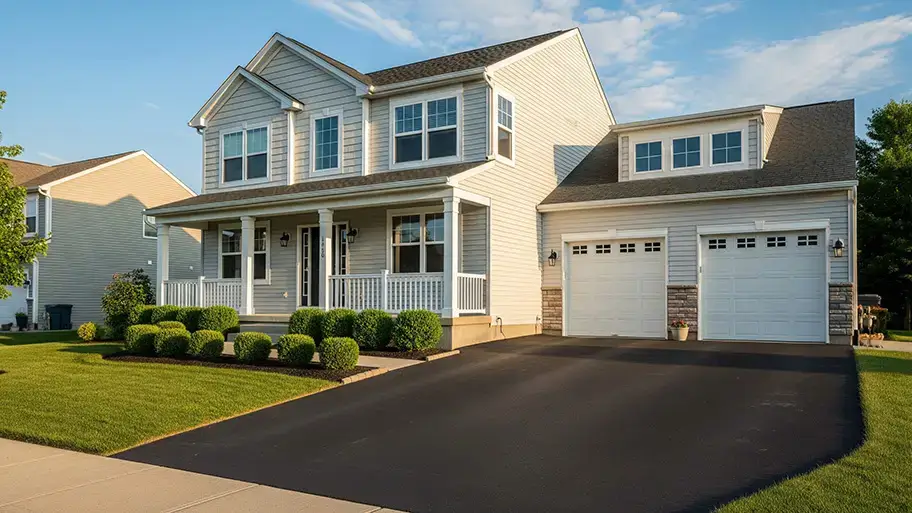
Recycled asphalt pavement — often called RAP or “millings” — is crushed-up old asphalt that gets reused instead of thrown away. It has become a popular choice for homeowners looking to pave a driveway on a budget. But is it right for you?
This guide covers the real pros and cons, based on user reports, forum discussions, and published industry data — no guesswork.
What Exactly Is It?
When roads are repaved, the old asphalt surface is ground up by milling machines. The resulting material is called asphalt millings or RAP. This material still contains bitumen (the black sticky binder that holds asphalt together), which means it can re-bind and harden when compacted—especially in warm weather.
The Pros
1. It’s Significantly Cheaper
This is the biggest reason people choose RAP. Here’s how the numbers stack up (2025–2026 U.S. data):
Material cost (per ton):
| Material | Cost per ton |
|---|---|
| Recycled asphalt (millings) | $10 – $20 |
| New hot-mix asphalt (HMA) | $40 – $80 |
Installed cost (per square foot):
| Driveway type | Cost per sq ft (installed) |
|---|---|
| Recycled asphalt | $2 – $5 (millings only) / $6.20 – $8.75 (full install) |
| New asphalt | $7 – $13 |
| Gravel | $1 – $3 |
| Concrete | $6 – $15 |
Real project cost for a typical 2-car driveway (approx. 400–600 sq ft):
- Materials only: $60 – $240
- Fully installed: $800 – $3,000
For comparison, the same driveway in new asphalt would typically run $2,800 – $7,800 installed.
Delivery of millings costs an extra $30 – $100 per truckload (8–20 tons), and some suppliers offer free delivery above a minimum order. Sealing the finished surface adds $1 – $2 per square foot but extends its life considerably.
On a per-ton basis, recycled asphalt is 2 to 5 times cheaper than new hot-mix asphalt — and the savings grow with driveway size.
2. It Hardens Over Time
Unlike loose gravel, RAP doesn’t stay loose. The residual bitumen in the material reactivates under heat and pressure. Given enough time and warm weather, a well-compacted RAP driveway can set as hard as concrete.
One user on TractorByNet put it simply: “Make sure it’s warm when you put it down and well compacted, and it will set like cement in a few weeks.”
3. It Stays Put Better Than Gravel
Gravel scatters. RAP doesn’t, at least not once it has compacted and bonded. Multiple forum users reported that RAP holds its position much better than crushed stone, stays cleaner underfoot, and doesn’t kick up as much dust.
4. It Drains Well and Handles Weather
RAP driveways shed water effectively. They can handle snowplowing without damage and resist weed growth better than gravel. In regions with heavy rain or snow, this matters.
5. It’s the Environmentally Responsible Choice
Recycled asphalt reuses a material that would otherwise go to a landfill. It requires less energy to produce than new asphalt, and it reduces the need to mine new raw materials. One ton of RAP directly replaces one ton of new asphalt — a straightforward environmental trade.
The Cons
1. It Doesn’t Look Like New Asphalt
New asphalt has a uniform jet-black color. RAP does not. The color is lighter overall and varies from spot to spot. It will show tire tracks and turning marks, much like a gravel driveway.
Some people like the look. Many don’t. If curb appeal is important to you, RAP may not meet your expectations.
2. Appearance Can Be Improved, But at Extra Cost
Applying an asphalt sealer after the RAP has fully set can improve both the look and the durability. However, this adds time, cost, and an extra step to the project.
3. It Can Crack and Crumble
RAP is more brittle than fresh asphalt. Because it’s made from compressed fragments rather than freshly mixed material, it’s more prone to cracking over time. Once cracks appear, weeds and grass can take hold and widen the damage.
4. Repair Is Difficult Once It Has Hardened
This is one of the more practical drawbacks. A forum user with direct experience explained, “Once it’s hard, it’s impossible to maintain with normal equipment. You can rip up crushed rock with a box blade—but not recycled asphalt.”
If you need to re-grade or fix a problem area later, hardened RAP resists reworking. It essentially becomes a solid slab.
5. Quality Is Not Consistent
RAP comes from different roads, different projects, and different batches. The bitumen content and aggregate mix vary. Some loads compact beautifully; others contain large chunks that are difficult to break apart or spread evenly.
There’s no standard quality label on a truckload of millings. You’re buying material from wherever the supplier sourced it.
6. Installation Conditions Matter A Lot
RAP performs well when installed in warm, dry weather and compacted properly. Install it in cold or wet conditions, and it may not bind correctly. On sloped driveways, millings can wash away in heavy rain before they’ve had a chance to set.
One forum user noted: “Fine material will wash downstream if nothing is added to help seal it — especially if there’s poor drainage.”
7. Potential Groundwater Concerns
RAP is porous and contains chemical binders. There is some concern that these chemicals can leach into the ground when it rains, potentially affecting soil or groundwater. Current research on this topic is limited, and no definitive conclusion has been reached. If you have a well or are near a water source, it may be worth asking your local contractor about this.
Practical Tips If You Decide to Go with RAP
- Install in warm weather. Heat reactivates the bitumen and helps the material bind.
- Compact thoroughly. Poor compaction is the main reason RAP driveways fail early.
- Wait before driving on it. Allow at least one week for millings to bond before regular vehicle traffic.
- Check what you’re buying. Ask your supplier where the millings came from and whether large chunks have been screened out.
- Seal it after it sets. An asphalt sealer applied after full hardening improves durability and appearance.
- Be careful on slopes. Steep or poorly drained driveways are a risk. Plan drainage before you lay any material.
Quick Comparison
| Factor | Recycled Asphalt (RAP) | New Asphalt | Gravel | Concrete |
|---|---|---|---|---|
| Cost (installed/sq ft) | $2 – $8.75 | $7 – $13 | $1 – $3 | $6 – $15 |
| Appearance | Uneven, lighter color | Uniform black | Variable | Uniform gray |
| Durability | Good (if installed right) | Excellent | Fair | Excellent |
| Maintenance | Moderate | Low–Moderate | High | Low |
| Eco-friendly | Yes | Moderate | Moderate | No |
| DIY-friendly | Yes | No | Yes | No |
Conclusion
Recycled asphalt driveways are a practical, cost-effective option — especially for rural properties, long driveways, or homeowners on a tight budget. The savings are real. The durability, when installed correctly, is solid.
The main downsides are appearance, repairability, and inconsistent quality. If you want a driveway that looks polished and is easy to maintain for decades, new asphalt or concrete will serve you better.
But if you’re looking for a durable, affordable surface that’s better than gravel and easier on the wallet than new asphalt, RAP is worth serious consideration.