Silica sand is one of the most widely used industrial minerals in the world. It is mainly composed of silicon dioxide, also known as SiO₂, and is valued for its hardness, chemical stability, high melting point, and consistent particle size.
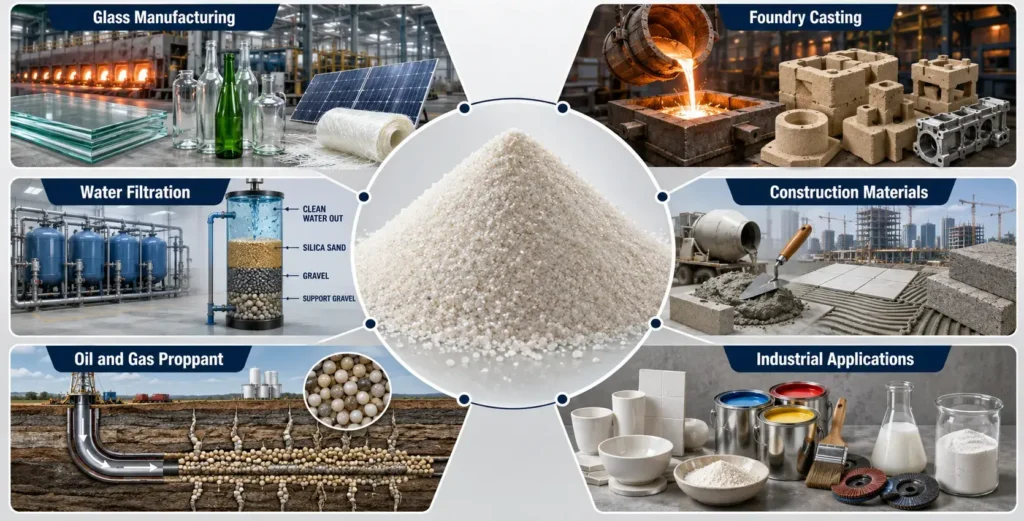
Unlike ordinary construction sand, silica sand usually contains a higher percentage of quartz and fewer impurities. Because of these properties, it is widely used in glass manufacturing, foundry casting, water filtration, construction materials, ceramics, chemicals, coatings, and oil and gas applications.
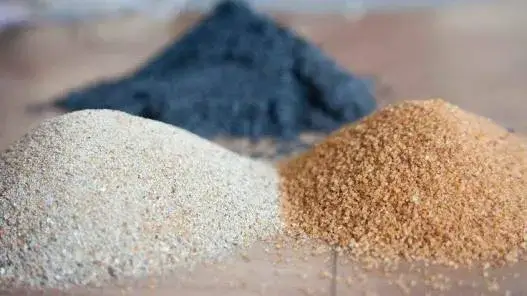
However, most natural silica sand cannot be used directly after mining. Raw sand often contains clay, silt, iron-bearing minerals, oversized particles, organic matter, and moisture. To meet industrial requirements, silica sand usually needs washing, screening, classification, dewatering, and sometimes crushing, drying, magnetic separation, or further purification.
This article explains what silica sand is, where it comes from, how it is mined, what it is used for, what challenges are common in silica sand mining, and what equipment is commonly used in a silica sand processing plant.
What Is Silica Sand?
Silica sand is a type of sand with a high content of silicon dioxide. In most cases, it comes from quartz-rich rocks, quartz sandstone, quartzite, or natural sand deposits that contain a large amount of quartz particles.
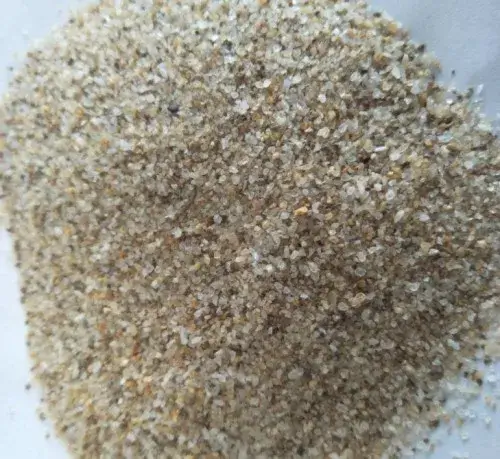
The main mineral in silica sand is quartz. Quartz is hard, chemically stable, and resistant to weathering. This is why silica sand can remain as durable grains after rocks are broken down by natural weathering, erosion, water movement, and sedimentation.
High purity silica sand is especially important for industrial applications. Glass manufacturing requires silica sand with controlled chemical composition and low impurity levels. Foundry sand requires good grain shape, thermal resistance, and stable particle size. Water filtration sand requires clean and properly graded particles.
In simple terms, silica sand is not just ordinary sand. It is an industrial raw material with higher purity, better consistency, and more demanding processing requirements.
Where Does Silica Sand Come From?
Silica sand mainly comes from quartz-rich geological sources. These sources may include natural sand deposits, sandstone deposits, quartzite, or quartz-rich rock formations.
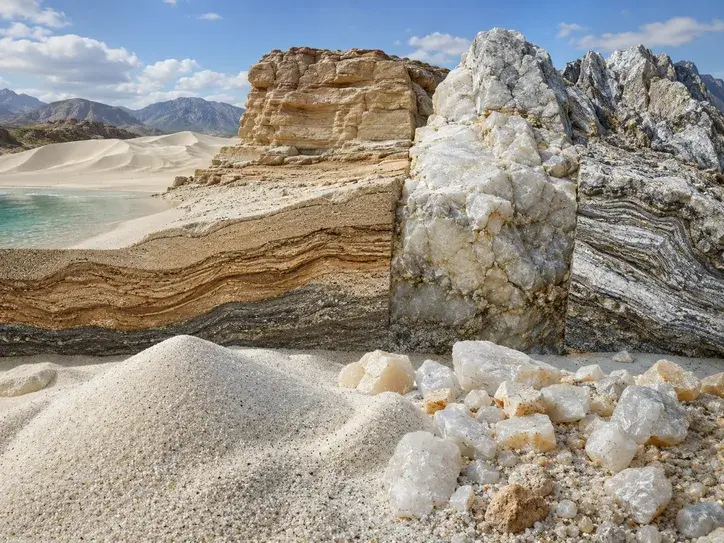
Over long periods of time, rocks containing quartz are broken down by weathering and erosion. The softer minerals may decompose or be washed away, while the harder quartz particles remain. Water, wind, and sedimentation then transport and concentrate these particles into sand deposits.
Silica sand can be found in river deposits, lake deposits, coastal areas, ancient sandstone formations, and open-pit sand mines. In some cases, silica sand is mined directly as loose sand. In other cases, quartz sandstone or quartz rock must be crushed before it can be processed into usable sand.
Silica sand is not a fossil. It is a mineral material formed from the breakdown and concentration of quartz-rich rocks over geological time.
How Is Silica Sand Mined?
Silica sand is commonly mined from open-pit sand deposits or quartz-rich rock sources. The mining method depends on the deposit type, raw material hardness, impurity content, water condition, and final product requirements.
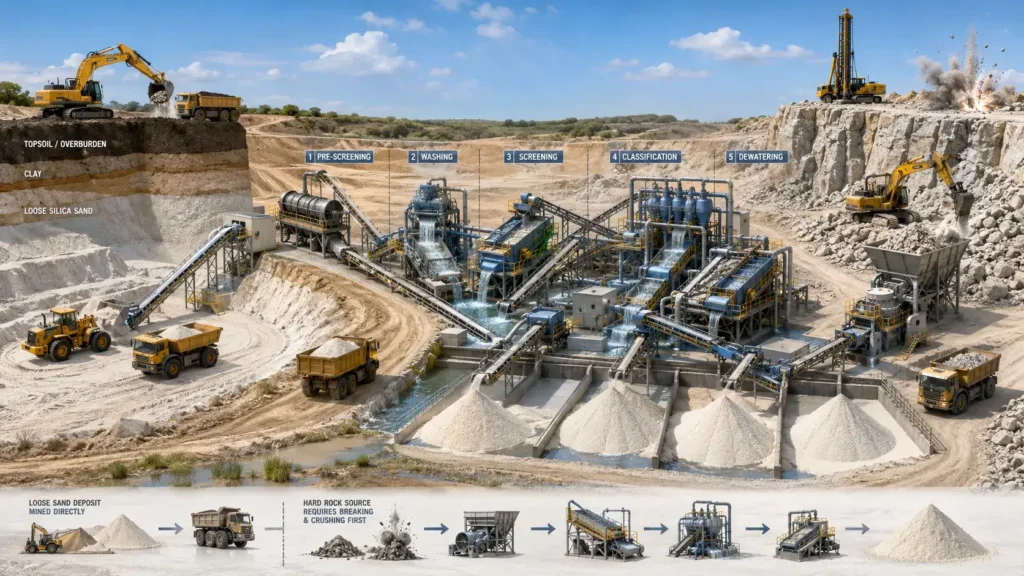
For loose sand deposits, mining is usually done with excavators, wheel loaders, trucks, and conveyors. The raw sand is removed from the deposit and transported to a processing plant for washing, screening, classification, and dewatering.
For harder materials such as sandstone, quartzite, or quartz rock, blasting or mechanical breaking may be required. The material then needs to be crushed before it can enter the silica sand processing system.
A typical silica sand mining process may include:
- Removing overburden such as soil, vegetation, clay, or unusable surface material.
- Excavating or quarrying the raw silica sand or quartz-rich material.
- Transporting the raw material to the processing area.
- Pre-screening the material to remove oversized stones and unwanted debris.
- Washing, screening, and classifying the sand to improve quality and particle consistency.
Mining is only the first step. The real value of silica sand is usually created through proper processing.
Common Challenges in Silica Sand Mining and Processing
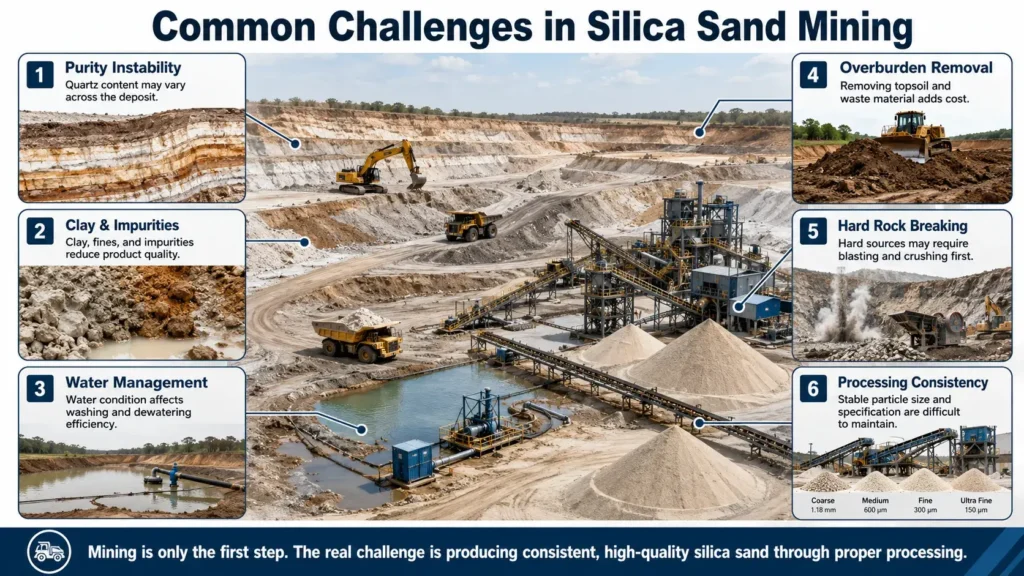
The most common problems in silica sand mining are usually not about whether the material can be excavated. The real challenges are unstable purity, high clay content, excessive iron content, inconsistent particle size, water use, wastewater treatment, tailings management, environmental approval, and transportation cost.
For industrial silica sand projects, these issues can directly affect product quality, processing cost, operating stability, and final market value.
1. Unstable Deposit Quality
This is one of the most common challenges in silica sand mining.
Even within the same mining area, the quality of sand can vary significantly at different depths and locations. Common variations include:
- Unstable SiO₂ content
- Changing Fe₂O₃ iron content
- Fluctuating clay and silt content
- Feldspar, mica, or heavy mineral contamination
- Color changes from white to yellow, gray, or brown
For general construction sand, these variations may not be a major problem. However, for glass sand, solar glass sand, foundry sand, and high-purity quartz sand, unstable quality can directly affect the selling price and market acceptance.
2. High Clay Content and Heavy Washing Requirements
Many silica sand deposits contain clay, silt, fine mud, and clay coatings on the sand particles. This can create several processing problems:
- Higher water consumption during washing
- Increased equipment wear
- More difficult dewatering
- Final sand clay content failing to meet specifications
- Serious fine sand loss
- Higher tailings and sludge treatment cost
Some silica sand deposits may look large in reserve, but if the clay content is too high, the real processing cost can become much higher than expected.
3. Excessive Iron Content
Iron content is one of the most critical issues in silica sand processing.
If the sand contains iron-bearing minerals, or if the surface of quartz particles is coated with iron oxide, it may cause problems such as:
- Green or yellow color in glass products
- Insufficient whiteness
- Lower solar glass quality
- Color problems in ceramic glaze
- Difficulty entering high-end markets
Common solutions may include attrition scrubbing, magnetic separation, flotation, or acid washing. However, every additional process increases investment cost, operating cost, and plant complexity.
4. Particle Size Distribution Does Not Meet Customer Requirements
Silica sand is not simply “the finer, the better” or “the coarser, the better.” Different applications require different particle size ranges.
Common problems include:
- Too many coarse particles
- Too much fine powder
- Low percentage of target particle size
- Low qualified product recovery after screening
- Poor particle shape
- Insufficient roundness or sphericity
For example, filtration sand, foundry sand, and frac sand all have strict requirements for particle size and particle shape. If the natural sand size distribution is not suitable, screening loss can be very high.
5. Water Supply and Wastewater Treatment Pressure
Silica sand washing requires a large amount of water, so water management is a very practical issue for many projects.
Common problems include:
- Insufficient water source
- Unstable water recycling system
- Slow sludge settlement
- High turbidity in wastewater
- Wastewater discharge not meeting environmental requirements
- Insufficient settling pond area
- Increasing flocculant cost
In many projects, the bottleneck is not mining itself, but washing wastewater, tailings sludge, and environmental approval.
6. Difficult Tailings and Fine Sludge Management
The clay, fine powder, and impurities removed during washing do not disappear. They become tailings and sludge.
Tailings problems may include:
- Large land occupation for storage
- High moisture content and difficult transportation
- Slow drying
- Overflow risk during rainy seasons
- Environmental risk
- Higher pressure for land restoration
If tailings and sludge are not properly managed, the mine may face complaints, production suspension, or environmental rectification.
7. Serious Equipment Wear
Quartz is hard and abrasive, so silica sand can cause obvious wear on processing equipment.
Commonly affected equipment includes:
- Sand washing machines
- Vibrating screen mesh
- Hydrocyclones
- Belt conveyors
- Pumps
- Pipes
- Crushers
- Sand making machines
- Dewatering screens
If the deposit is sandstone-type material, crushing and liberation may be required before washing, which can further increase wear. Maintenance cost should be considered at the beginning of the project.
8. Rainy Season and Groundwater Problems
Open-pit silica sand mines are easily affected by weather and groundwater.
Common problems include:
- Water accumulation in the mining pit during rainy seasons
- Higher moisture content in the sand layer
- Muddy haul roads
- Unstable pit slopes
- Higher load on the washing system
- Increased drying cost for final sand
If the groundwater level is high, a drainage system may be required. Otherwise, mining efficiency can be significantly reduced.
9. High Transportation Cost
Silica sand is a bulk mineral product with relatively low unit value, so transportation cost has a major impact on profitability.
Common problems include:
- Long distance from the mine to the port
- Long distance from glass plants, cement plants, or foundries
- High road transportation cost
- Material loss during loading and unloading
- Higher freight cost due to wet sand weight
- Additional cost if drying is required before transport
Whether a silica sand project is profitable depends not only on deposit quality, but also on distance to customers, distance to ports, and overall logistics cost.
10. Environmental, Land, and Permit Issues
Environmental and permitting issues are extremely important in real silica sand mining projects.
These may include:
- Mining license
- Land use permit
- Water use permit
- Environmental impact approval
- Dust control
- Noise control
- Wastewater discharge
- Tailings storage
- Mine reclamation
- Complaints from nearby communities
Silica sand mines located near rivers, wetlands, coastlines, farmland, or residential areas usually face higher approval and operation risks.
Summary of Mining Challenges
The core challenges in silica sand mining and processing can be summarized into six key issues:
unstable quality, high clay content, excessive iron content, unsuitable particle size, difficult wastewater and tailings treatment, and high transportation cost.
A successful silica sand project requires more than simply extracting sand from the ground. It needs proper deposit evaluation, process design, washing and classification equipment, water recycling, tailings management, environmental planning, and logistics control.
Silica Sand vs. Regular Sand
Although silica sand and regular sand may look similar, they are not the same in industrial applications.
| Item | Silica Sand | Regular Sand |
|---|---|---|
| Main Component | High quartz / SiO₂ content | Mixed minerals |
| Purity | Higher purity | Lower and more variable |
| Color | Often white, light yellow, or light gray | Varies widely |
| Particle Size | More controlled after processing | Often less consistent |
| Applications | Glass, foundry, filtration, industrial use | General construction and landscaping |
| Processing Requirement | Usually needs washing, screening, and classification | May be used directly or with simple processing |
Regular sand is often suitable for general construction, filling, landscaping, or concrete applications. Silica sand is used when chemical composition, grain size, cleanliness, and consistency are more important.
What Is Silica Sand Used For?
Silica sand has many industrial uses because of its high quartz content, hardness, chemical stability, and heat resistance.
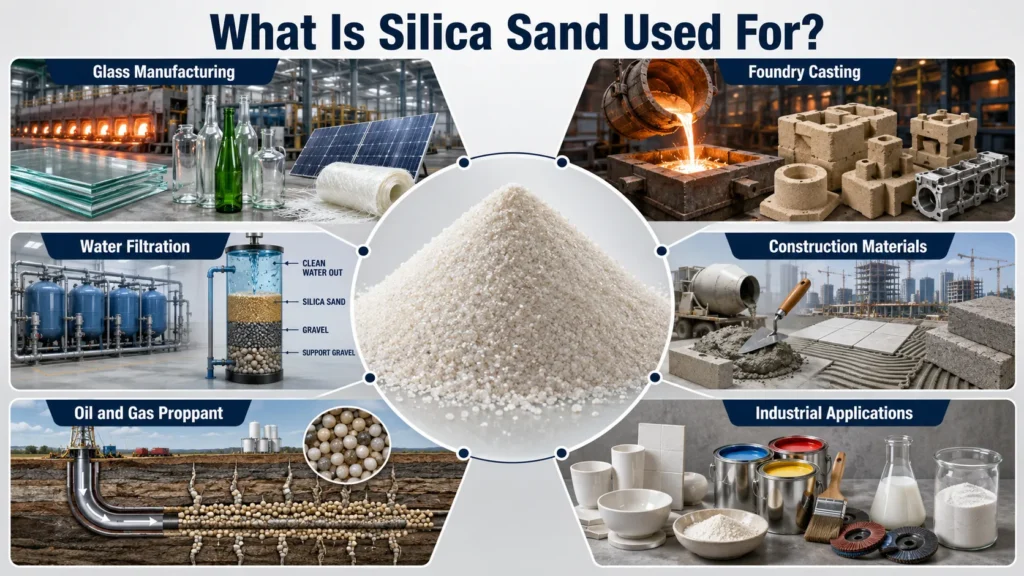
Glass Manufacturing
Silica sand is one of the main raw materials used in glass production. It provides the silicon dioxide needed to form glass. Silica sand for glass making usually requires high purity, low iron content, and controlled particle size.
It is widely used in flat glass, container glass, solar glass, fiberglass, and specialty glass production.
Foundry Casting
Foundry silica sand is used to make molds and cores for metal casting. It needs to withstand high temperatures and maintain shape during the casting process.
Good foundry sand usually requires proper grain size, thermal stability, and low impurity content.
Water Filtration
Silica sand for water filtration is used in water treatment systems to remove suspended solids. It is commonly used in industrial filtration, municipal water treatment, wastewater treatment, and other filtration systems.
For filtration use, the sand must be clean, durable, and properly graded.
Construction Materials
Construction silica sand can be used in concrete, mortar, tile adhesive, flooring systems, grouts, and other building materials. In these applications, particle size and cleanliness are important for performance and consistency.
Oil and Gas Proppant
Silica sand can also be used as a proppant in hydraulic fracturing. In this application, sand particles help keep fractures open so oil or gas can flow more easily.
This type of silica sand requires specific strength, roundness, size distribution, and purity.
Industrial Applications
Industrial silica sand is also used in ceramics, chemicals, coatings, paints, abrasives, and other manufacturing processes. Different industries require different grades of silica sand, which is why proper processing is so important.
Why Silica Sand Needs Processing
Raw silica sand usually contains impurities that must be removed before industrial use. These impurities may include clay, silt, iron-bearing minerals, organic matter, oversized stones, and unwanted fine particles.
Processing helps improve:
- SiO₂ purity
- Particle size consistency
- Cleanliness
- Moisture control
- Product recovery rate
- Final product quality
- Suitability for glass, foundry, filtration, and industrial applications
A silica sand processing plant is designed according to the raw material condition and final product requirements. Some projects only need washing and screening. Others require crushing, scrubbing, classification, dewatering, drying, magnetic separation, or further purification.
Main Steps in Silica Sand Processing
The exact process depends on the raw material and application, but most silica sand processing systems include several key steps.
Feeding and Pre-Screening
The raw material first enters the system through a feeder or conveyor. Pre-screening removes large stones, roots, debris, and oversized materials before the main processing stage.
This step protects downstream equipment and improves processing efficiency.
Crushing
If the raw material comes from quartz rock, quartzite, or sandstone, crushing may be required. A silica sand crusher can reduce large rock into smaller particles before washing and screening.
Common crushing equipment may include jaw crushers, cone crushers, and impact crushers. The choice depends on feed size, hardness, capacity, and final size requirement.
Washing
Silica sand washing removes clay, silt, dust, and surface impurities. This is one of the most important steps in many silica sand processing plants.
Common washing equipment includes wheel sand washers, spiral sand washers, attrition scrubbers, and hydrocyclone systems. The goal is to produce cleaner washed silica sand with lower impurity content.
Screening and Classification
After washing, silica sand is screened and classified into different particle sizes. Fine silica sand and coarse silica sand may be separated according to customer requirements.
Vibrating screens, classifiers, and hydrocyclones are commonly used for this step. Accurate classification helps ensure that the final product meets the required specification.
Dewatering
After washing and classification, the sand usually contains a high amount of moisture. Dewatering screens are used to remove excess water and make the sand easier to stockpile, transport, or dry.
A good dewatering system can reduce moisture and improve the handling efficiency of the final product.
Drying and Storage
Some applications require dry silica sand. In this case, the material may go through a drying system after washing and dewatering.
The final product is then stored in stockpiles, silos, or bulk loading systems according to the project layout.
Equipment Used in a Silica Sand Processing Plant
A complete silica sand processing plant may include different types of equipment depending on the raw material and final product.
Common silica sand processing plant equipment includes:
- Feeding equipment
- Belt conveyors
- Jaw crusher
- Cone crusher
- Impact crusher
- Vibrating screen
- Sand washing machine
- Hydrocyclone
- Classifier
- Dewatering screen
- Dryer
- Water recycling system
- Mobile screening plant
- Complete silica sand washing plant
For natural sand deposits, the focus is usually washing, screening, classification, and dewatering. For quartz rock or sandstone sources, crushing and pre-screening may be added before the washing process.
A well-designed silica sand washing plant should not only clean the sand, but also control fine sand loss, reduce water consumption, improve recovery rate, and produce consistent final specifications.
How to Choose the Right Silica Sand Processing Equipment
Choosing the right silica sand processing plant equipment depends on several important factors.
First, the raw material type must be confirmed. Natural loose sand, sandstone, quartzite, and quartz rock require different processing methods.
Second, the feed size and impurity level are important. If the material contains oversized particles, pre-screening or crushing may be necessary. If the material has high clay content, stronger washing and scrubbing may be required.
Third, the final sand specification should be clear. Different applications need different particle sizes, purity levels, iron limits, and moisture content.
Before selecting equipment, project owners should confirm:
- Raw material type
- Feeding size
- Required capacity
- Final sand size
- Clay and silt content
- Iron content
- Moisture requirement
- Water availability
- Tailings treatment method
- Site layout
- Fixed or mobile plant requirement
- Final application, such as glass, foundry, filtration, construction, or frac sand
A properly designed plant can reduce waste, improve product quality, increase qualified product recovery, and lower operating costs.
Fixed Plant vs. Mobile Silica Sand Processing Plant
Silica sand processing plants can be designed as fixed production lines or mobile systems.
A fixed silica sand processing plant is suitable for long-term production sites with stable raw material supply and high capacity requirements. It usually allows more complete equipment configuration and higher production efficiency.
A mobile silica sand screening or washing plant is suitable for temporary projects, multiple mining areas, or sites that require flexible relocation. Mobile equipment can reduce installation time and improve site flexibility.
| Plant Type | Best For | Advantages |
|---|---|---|
| Fixed silica sand processing plant | Long-term production site | Higher capacity, stable layout, complete configuration |
| Mobile silica sand processing plant | Temporary or multi-site projects | Flexible relocation, fast setup, and lower civil work requirements |
The right choice depends on production scale, site conditions, investment plan, raw material distribution, and transportation distance.
FAQ about silica sand
What is silica sand?
Silica sand is a high-quartz sand mainly composed of silicon dioxide. It is used as an industrial raw material in glass, foundry, filtration, construction, ceramics, chemicals, coatings, and other applications.
Is silica sand the same as quartz sand?
Silica sand and quartz sand are closely related. In many industrial contexts, silica sand refers to sand with a high quartz or SiO₂ content. However, the exact quality depends on purity, particle size, iron content, clay content, and impurity levels.
What is silica sand used for?
Silica sand is used for glass making, foundry casting, water filtration, construction materials, ceramics, chemicals, coatings, and oil and gas proppant applications.
Where does silica sand come from?
Silica sand comes from quartz-rich rocks, sandstone deposits, natural sand deposits, and other geological sources. It forms through weathering, erosion, transportation, and sedimentation of quartz-rich materials.
How is silica sand mined?
Silica sand is commonly mined from open-pit sand deposits or quartz-rich rock sources. Loose sand can be excavated directly, while sandstone, quartzite, or quartz rock may require quarrying, crushing, and further processing.
What are the main challenges in silica sand mining?
The main challenges include unstable deposit quality, high clay content, excessive iron content, unsuitable particle size distribution, water supply pressure, wastewater treatment, tailings management, equipment wear, environmental approval, and high transportation cost.
Why does silica sand need washing?
Silica sand needs washing to remove clay, silt, fine mud, dust, and surface impurities. Washing helps improve cleanliness, particle consistency, and final product quality.
What equipment is used for silica sand washing?
Common silica sand washing equipment includes sand washing machines, hydrocyclones, classifiers, attrition scrubbers, vibrating screens, and dewatering screens.
Can silica sand be produced from quartz rock?
Yes. If the raw material is quartz rock, quartzite, or quartz sandstone, it may need to be crushed, screened, washed, classified, and dewatered to produce usable silica sand.
How do I choose a silica sand processing plant?
You need to consider raw material type, feeding size, capacity, final sand size, clay content, iron content, impurity level, water availability, moisture requirement, tailings treatment, and whether the project needs a fixed or mobile plant.
Need Equipment for Silica Sand Processing?
Silica sand quality depends not only on the deposit, but also on the processing system. Proper crushing, washing, screening, classification, and dewatering equipment can help improve product consistency, reduce fine sand loss, control moisture, and lower long-term operating problems.
SUHMAN provides crushing, screening, washing, classification, and dewatering equipment for silica sand processing projects. Whether your material comes from natural sand deposits, sandstone, quartzite, or quartz rock, we can help you evaluate the raw material, capacity requirement, final sand size, and plant layout.
Contact us to discuss a silica sand processing solution for your project.