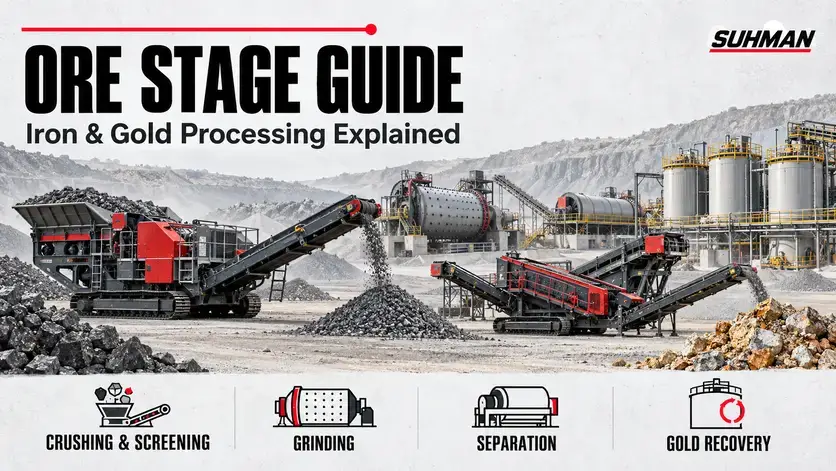
Every ore stage has a specific job. Crushing controls rock size. Grinding helps free valuable minerals from the surrounding rock. Separation and recovery methods then turn suitable feed into a useful product.
The right combination depends on the ore. A high-grade iron ore operation may mainly need crushing, screening and product handling. A refractory gold operation may need grinding, pretreatment and chemical recovery. Adding more equipment does not automatically improve either route.
This guide explains the main ore processing stages, shows how iron and gold treatment differ, and connects each step to practical equipment choices.
What Is an Ore Stage?
In this guide, an ore stage means one step in the industrial processing of ore. That step may prepare the feed, reduce particle size, separate minerals or recover metal.
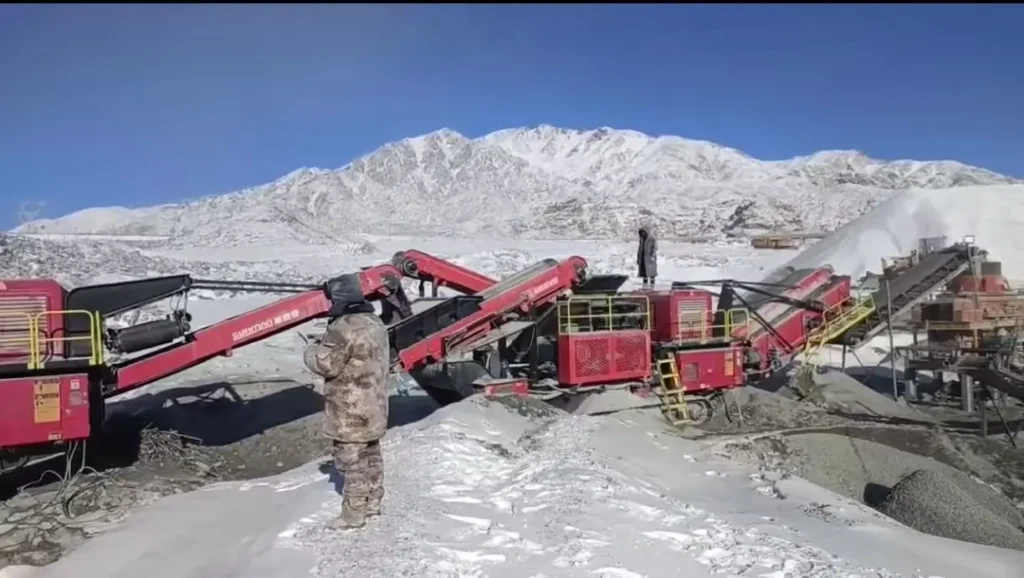
Crushing and screening prepare iron ore for the next processing stage.
Three terms help explain the process:
- Run-of-mine ore, or ROM ore: material that arrives from the mine before plant treatment.
- Concentrate: a product with a higher proportion of the target mineral than the original feed.
- Tailings: material that remains after the plant separates or extracts the valuable component.
Geologists also use “ore stage” to describe a period of mineralization during deposit formation. Here, the term refers to plant processing. www.usgs.gov
The Main Stages of Ore Processing
A flowsheet shows how material moves through the plant. Most mineral processing routes draw on the following stages, although plants may combine, repeat or omit steps.
| Этап | Main purpose | Typical output |
|---|---|---|
| Preparation and stockpiling | Manage feed quality and supply | Controlled plant feed |
| Crushing and screening | Reduce rock size and separate size fractions | Sized ore for the next operation |
| Grinding and classification | Improve mineral liberation and control particle size | Suitable separation or leaching feed |
| Mineral separation or metal extraction | Recover the valuable component | Concentrate or a metal-bearing process stream |
| Dewatering and product handling | Manage moisture, products and process water | Product ready for further treatment or dispatch |
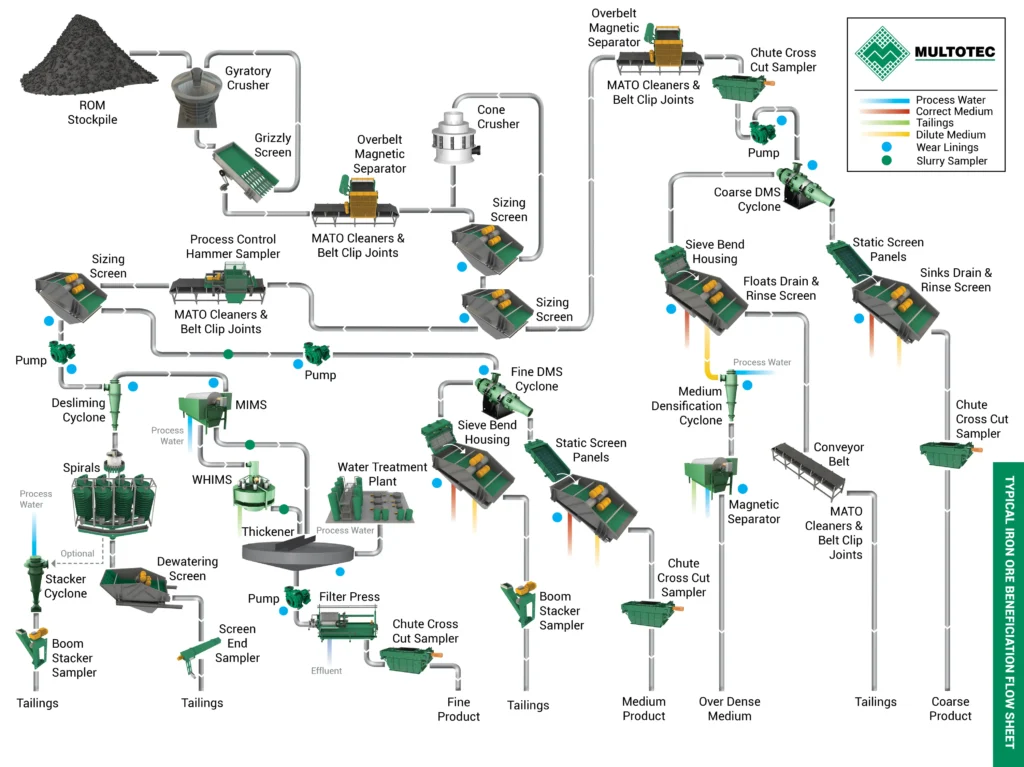
An example iron ore beneficiation route. The flow varies with ore mineralogy.
Canada’s metal mining guidance groups ore processing around size reduction, physical or chemical separation, and dewatering. The actual sequence follows the deposit and recovery method. www.canada.ca
Ore Preparation, Sorting and Stockpiling
Preparation starts with understanding what enters the plant. Ore grade, hardness, moisture and clay content may vary across a deposit.
Operators can blend stockpiles to moderate those changes. Suitable projects may also use sorting or pre-concentration to reject some waste before further treatment.
A stockpile provides a buffer between operations. Feeders then control the material flow into the next machine. When planning this stage, consider both storage capacity and the plant’s ability to reclaim ore consistently.
Дробление и просеивание
Crushers break large rocks into smaller particles. Screens divide that material by size and direct each fraction to the right destination.
A pre-screen can bypass material that already meets the next-stage requirement. In a closed crushing circuit, a screen returns oversize to a crusher and lets acceptable material leave the circuit.
That division affects the whole plant. Poor screening can increase unnecessary processing, wear and downstream load. Review the screen and crusher together when assessing a bottleneck. Метсо
Grinding and Classification
Valuable minerals often remain attached to waste rock after crushing. Grinding reduces particles further to improve liberation, or the release of valuable minerals from their host material.
Classification controls which particles move forward. In a common wet grinding circuit, hydrocyclones send a coarse stream back for further grinding while a finer stream continues downstream.
The target is a suitable size distribution for recovery. Excessive grinding consumes energy and may create troublesome fines. metso.com
Ore Dressing and Mineral Separation
An ore dressing process, also called beneficiation, separates valuable minerals from unwanted material, or gangue.
Plants choose methods that exploit useful differences between minerals:
- Гравитационное разделение uses differences in density.
- Магнитная сепарация uses differences in magnetic response.
- Флотация uses differences in surface behavior with suitable reagents and air bubbles.
Some routes produce a mineral concentrate. Others continue into chemical extraction, such as gold leaching. Ore characteristics determine which combination makes sense. www.canada.ca
Dewatering and Product Handling
Wet processing leaves water in concentrates and tailings. Thickeners recover part of that water through settling. Filters remove more moisture where the product or disposal route requires it.
Engineers should plan water recovery alongside storage, conveying and transport. Metso’s dry tailings systems, for example, combine thickening and pressure filtration before handling the resulting filter cake. Метсо
Iron Ore Processing Stages
Iron ore processing aims to produce material that meets the customer’s iron grade, impurity, size and moisture requirements. Different deposits reach those specifications through different routes.
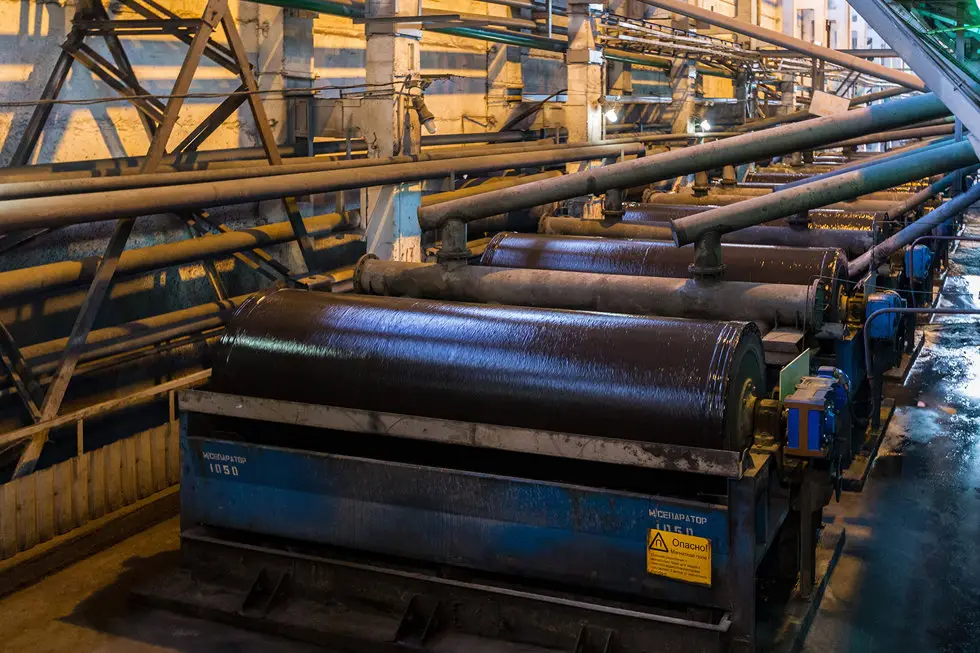
Flotation equipment at Poltava illustrates one iron ore beneficiation stage.
How Iron Ore Type Changes the Processing Route
High-grade hematite deposits may support direct-shipping products with relatively limited treatment. Many magnetite deposits need more extensive beneficiation, including grinding to free magnetite from its surrounding minerals. Метсо
Avoid choosing a flowsheet from the mineral name alone. Mineral size, clay content, impurities and customer specifications also matter. Two deposits containing the same main iron mineral can require different plants.
Pre-Screening and Crushing
Pre-screening separates suitable fines from larger feed where the application supports that arrangement. Primary crushing reduces large ROM rocks; later crushers provide further reduction when necessary.
A jaw or gyratory crusher may handle primary duty, while cone crushers often handle subsequent stages. Screens control the material that leaves the circuit.
BHP’s South Flank project illustrates the importance of this front end: its infrastructure includes crushing, screening, conveying, stockyards and train loading. BHP
Stockpiling and Controlled Feeding
After crushing, a stockpile can separate the crusher’s operating schedule from downstream demand. This buffer helps a plant manage maintenance and interruptions.
Feeders should supply a predictable flow rather than alternating between surges and shortages. Ask the supplier how the reclaim system handles changes in moisture, particle size and material flow. Stockpile volume alone does not guarantee stable feeding.
Grinding and Classification
Iron ore that needs further liberation moves into an appropriate grinding circuit. The required fineness depends on how iron minerals occur within the rock.
Engineers may combine grinding and separation in stages. Recovering suitable material earlier can reduce the amount that needs further treatment. Metso’s magnetite process study compares several such circuit arrangements and their energy implications. Метсо
Gravity, Magnetic Separation and Flotation
Gravity separation can recover suitable dense iron minerals. Magnetic separation suits minerals with a useful magnetic response, while high-intensity or high-gradient systems can address some weakly magnetic materials. Метсо
Some plants also use flotation to improve concentrate quality. At Kaunis Iron, for example, the plant follows magnetic separation with flotation to reduce sulfur. Метсо
The plant’s test results should determine the sequence. Combining every available method adds cost without necessarily improving the product.
Dewatering and Pelletizing Where Required
Wet concentrate needs appropriate moisture control before storage, transport or further treatment. Some operations then convert iron ore fines into pellets.
Pelletizing combines fine material into small balls and hardens them through heat treatment. Steelmakers can use these pellets in blast furnaces or direct reduction plants. This downstream route applies when the product strategy calls for pellets. www.metso.com
Gold Ore Processing Stages
Gold processing aims to recover gold economically from its host material. A gold assay shows how much gold an ore contains, but mineralogy helps explain how the plant can recover it.
Ore Preparation: Blending, Crushing and Grinding
Preparation brings the ore to a suitable condition for its recovery route. A milling plant generally needs controlled crushing and grinding feed. A heap-leach route has different preparation requirements.
Blending can moderate changes in ore properties. Crushing, screening and grinding then support the chosen process. SGS identifies jaw and cone crushers, several mill types and gravity equipment among the options for preparing gold-bearing feed. sgs.com
Processing Free-Milling Gold Ore
Free-milling gold ore responds well to conventional recovery methods, particularly cyanide leaching under suitable conditions. The term does not mean that every particle contains visible, easily separated gold. sgs.com
Where the ore contains recoverable free gold, gravity concentration can capture some of it before further treatment. Plants may combine that step with leaching of the remaining material. Ore tests establish whether gravity recovery adds enough value to justify the equipment. sgs.com
Pretreatment Options for Refractory Gold Ore
Refractory ores resist conventional gold recovery. Sulfide minerals may trap gold, and naturally occurring carbon can capture dissolved gold from process solution. Mineralogical testing helps identify the source of the difficulty. sgs.com
Potential pretreatment options include roasting, pressure oxidation, biological oxidation and ultra-fine grinding. Their suitability depends on the ore and the reason for poor recovery. They do not perform identical jobs. www.sgs.com
This is why a refractory gold flowsheet needs more than a standard equipment list. Engineers must establish which treatment makes the gold accessible to the next recovery step.
Roasting and Off-Gas Treatment
Roasting can oxidize sulfur-bearing minerals and organic carbon in suitable refractory feeds. It prepares a treated solid product for downstream recovery.
Engineers control temperature, oxygen supply and feed conditions to achieve the required result. Gas cleaning forms part of the process because the feed may generate sulfur dioxide, dust and other pollutants. The ore’s composition determines the necessary treatment systems. Метсо
Use project-specific testwork to establish operating conditions. A temperature or residence time from another mine cannot serve as a universal design value.
Leaching, Carbon Adsorption and Gold Recovery
In a suitable cyanide leaching circuit, the solution dissolves accessible gold. Activated carbon can then collect gold from the process stream.
Carbon-in-leach, or CIL, combines leaching and carbon adsorption within the circuit. Carbon-in-pulp, or CIP, places adsorption after the main leaching stage. Subsequent operations remove gold from the loaded carbon and produce a recoverable metal product. Метсо
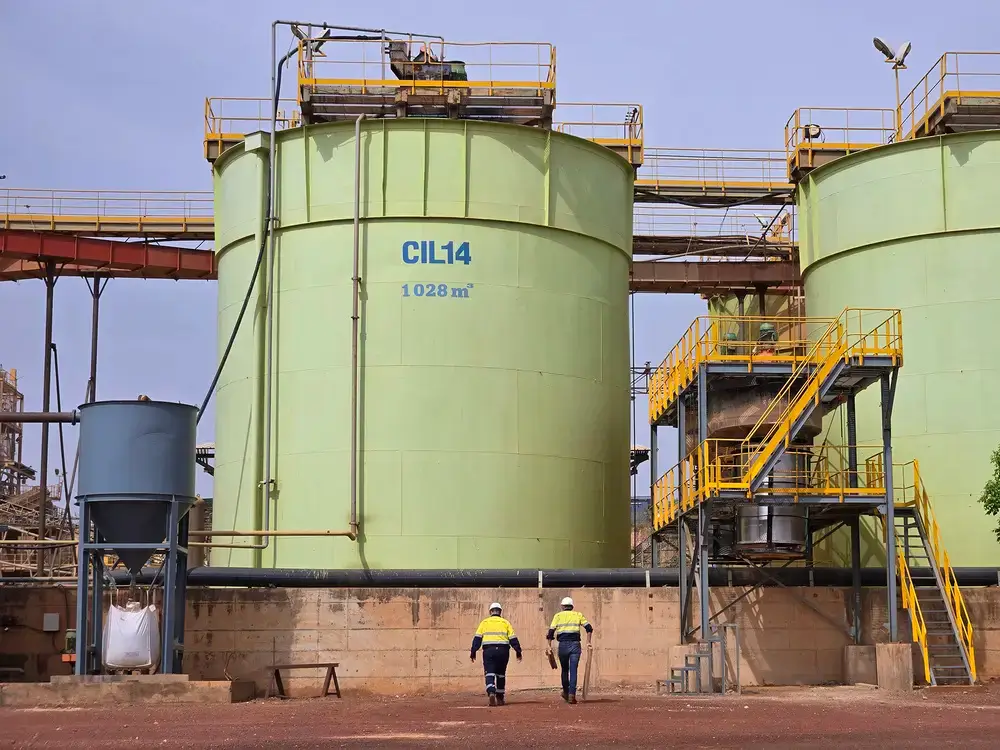
Nampala uses gravity concentration followed by carbon-in-leach gold recovery.
Ore properties and test results guide the choice between recovery arrangements. Plants also need suitable process control and residue treatment.
Tailings Management and Water Recovery
Gold plants must manage the residues and water that remain after recovery. Depending on the process, treatment may address residual reagents before water reuse or disposal.
Metso’s Suzdal case describes biological destruction of cyanide and thiocyanate in leach residues to improve water management. It illustrates how residue treatment belongs within the overall recovery flowsheet. Метсо
Iron Ore vs. Gold Ore Processing: Key Differences
Both routes may use crushing, screening, grinding and water recovery. Their downstream objectives create the largest differences.
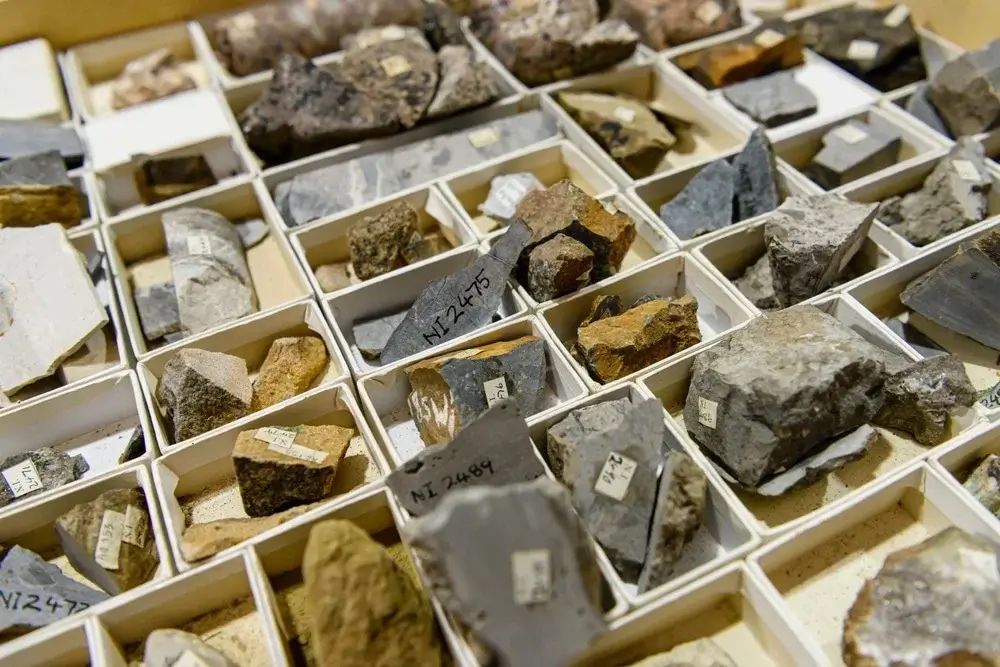
Sample testing helps explain why different ores need different processing routes.
| Сравнение | Iron ore processing | Gold ore processing |
|---|---|---|
| Main objective | Meet iron product grade, impurity, size and moisture specifications | Recover gold economically from the ore |
| Key ore characteristics | Iron mineral type, liberation, impurities and clay | Gold occurrence, mineral associations and response to recovery methods |
| Распространенные методы восстановления | Gravity separation, magnetic separation and flotation where appropriate | Gravity recovery, flotation, leaching and suitable pretreatment |
| Additional treatment | Pelletizing for selected product routes | Oxidation or other pretreatment for selected refractory feeds |
| Typical product | Lump, fines, concentrate or pellets | Gold-bearing concentrate or a recovered gold product, including doré |
| Main operating concerns | Product quality, recovery, energy use and moisture | Gold recovery, reagent demand, energy and residue management |
Grade and recovery answer different questions. Grade measures the valuable component’s concentration. Recovery measures how much of that component reaches the recovered product. A higher product grade does not automatically mean a higher recovery.
Compare both measures when evaluating a flowsheet.
Equipment Used at Each Ore Stage
Equipment should match its duty within the circuit. Start with the material, required output and relationship between machines.
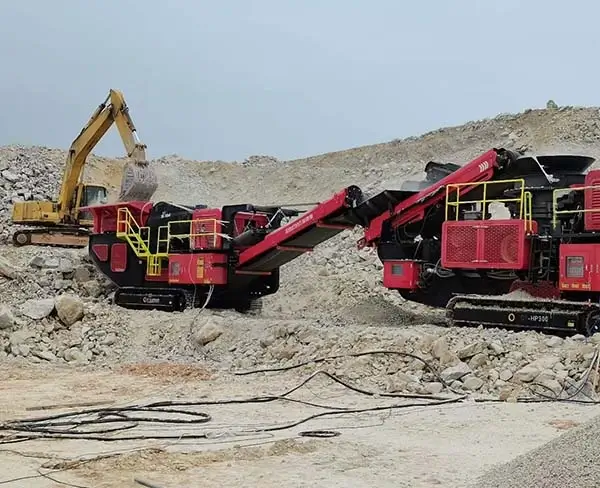
A granite crushing plant shows how crushers, screens and conveyors work together.
| Equipment group | Typical duty | Main selection considerations |
|---|---|---|
| Feeders and conveyors | Control and transfer material | Feed size, flow behavior, throughput and layout |
| Jaw or gyratory crushers | Первичное уменьшение размера | Maximum feed size, rock properties and capacity |
| конусные дробилки | Further reduction in suitable circuits | Feed grading, wear, settings and target product |
| Экраны | Scalping, sizing and oversize return | Aperture, feed distribution, moisture and screen load |
| Grinding mills | Improve mineral liberation | Grindability, feed size and target size distribution |
| Hydrocyclones and classifiers | Separate particle streams | Slurry conditions, cut size and circuit balance |
| Gravity, magnetic and flotation equipment | Recover suitable minerals | Mineral properties and testwork response |
| Thickeners and filters | Manage solids and water | Settling behavior, filtration response and moisture target |
A crusher comparison becomes more useful when you consider the complete circuit. Our cone crusher vs. jaw crusher guide explains their different roles. A suitable сортировочная установка then helps control product sizes and oversize return.
For an iron ore example, SUHMAN’s Mohe project combines an SE-1060 mobile jaw crusher, an SY-HP300 mobile cone crusher and an SS-7018 mobile screen. The project also uses a low-temperature configuration to address winter operating conditions. crushplant.com
How to Choose the Right Ore Processing Flow
Start with Ore Characteristics and Testwork
Collect representative samples before choosing the final flowsheet. Samples should capture the ore types and variability that the plant will encounter.
Ask the testing team to investigate mineral associations, liberation, grindability and separation or leaching response. SGS offers bench- and pilot-scale programs covering comminution, beneficiation, flotation and hydrometallurgy. SGS USA
Use the results to explain the proposed route. A flowsheet should show why each operation belongs in the plant and what it contributes.
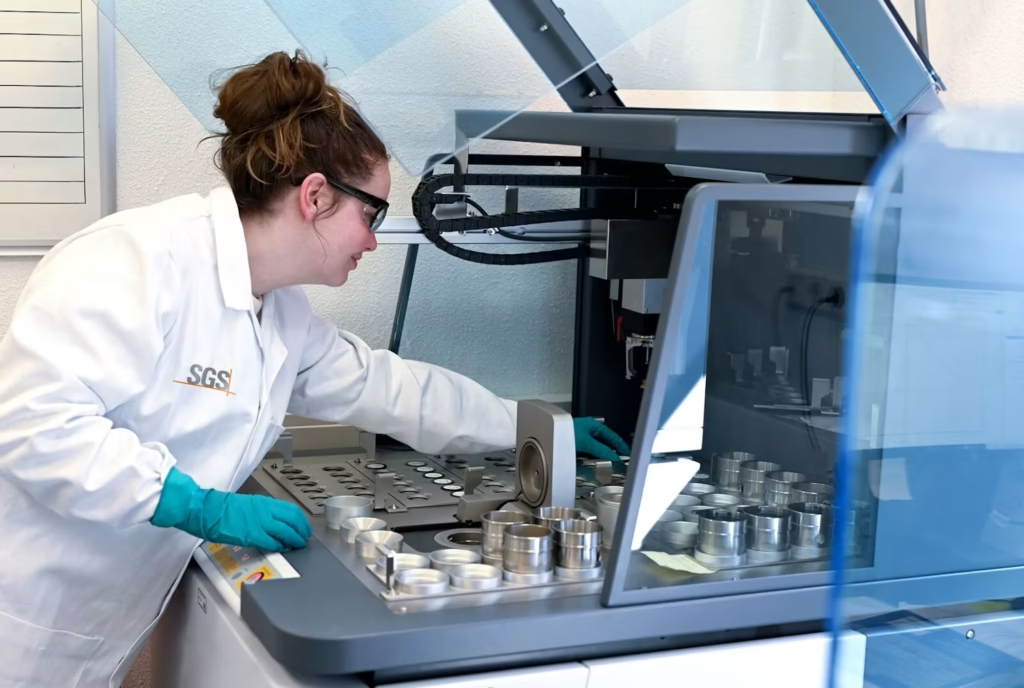
Laboratory analysis provides data for choosing an ore processing route.
Match Capacity, Particle Size and Circuit Design
Give every supplier the same design brief: maximum feed size, normal feed distribution, required output, moisture range and operating schedule.
Then ask how the circuit handles oversize. An open circuit passes material onward without a dedicated size-control return loop. A closed circuit returns oversize for another pass.
Returning material increases the load inside the circuit. When comparing proposals, distinguish fresh-feed throughput, total machine load and final acceptable product output. Request a material balance that shows all three.
Evaluate Operating Costs and Site Conditions
Compare the complete cost of making the required product. Include power, wear parts, maintenance, water, labor and downtime.
Site conditions also change equipment needs. Consider cold weather, dust control, access for maintenance, available power and whether the plant must relocate.
Before requesting a crushing and screening proposal, prepare:
- Ore description and available test reports.
- Required fresh-feed throughput and operating hours.
- Maximum feed size and typical size distribution.
- Target product sizes and acceptable oversize.
- Moisture, clay and expected ore variability.
- Site layout, utilities and mobility requirements.
This information makes competing proposals easier to compare.
Common Problems in Ore Processing
An issue at one ore stage can affect several operations downstream. Start troubleshooting with measurements of feed, product and operating conditions.
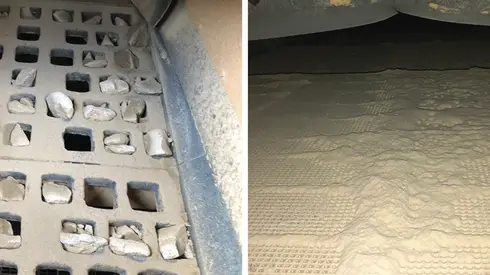
Material lodged in screen openings can reduce screening efficiency.
| Симптом | Possible contributors | Initial checks |
|---|---|---|
| Unstable crusher load | Uneven feeding or changing feed size | Feeder rate, hopper flow and feed distribution |
| Poor screening | Blinding, worn media or uneven loading | Apertures, deck condition, moisture and material spread |
| Excessive oversize return | Crusher output or screening performance | Product size distribution, settings and screen efficiency |
| Rapid wear | Abrasive feed or unsuitable operating conditions | Ore changes, wear pattern and operating settings |
| Low recovery | Inadequate liberation or unsuitable recovery conditions | Mineralogy, grind size and relevant process controls |
| Poor dewatering | Changes in fines, slurry or settling behavior | Feed solids, settling tests and filter performance |
Record changes before adjusting several controls at once. Compare the current feed and product with the design basis, then investigate the cause with the relevant equipment or process specialist.
Заключение
Every ore stage should serve a clear purpose in the overall recovery route. The ore’s mineralogy and product requirements determine how much preparation, size reduction, separation and extraction the plant needs.
For the crushing and screening section, focus on consistent feeding, suitable reduction stages and effective size control. Compare equipment as a connected circuit and support the design with ore data.
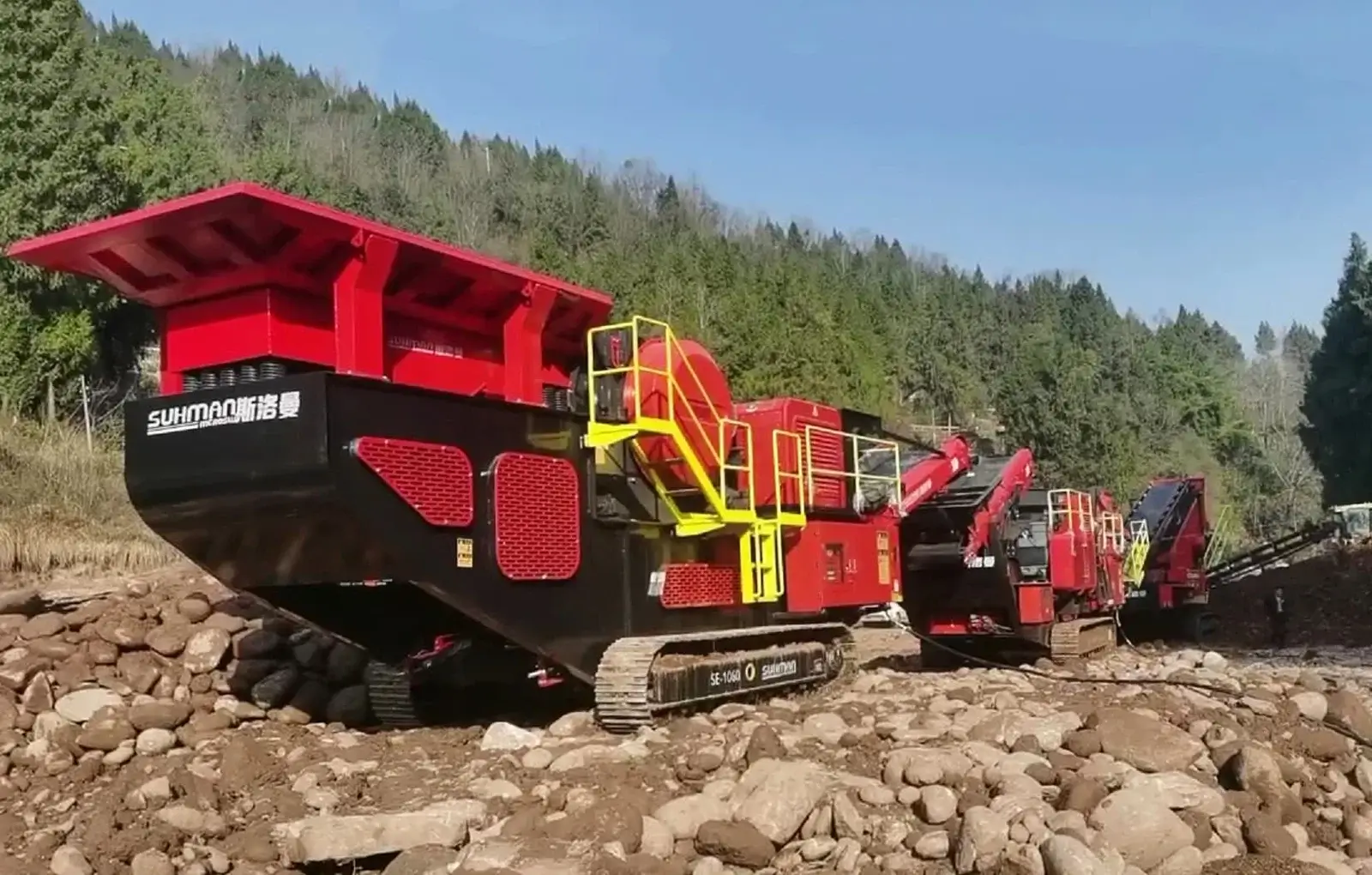
A river pebble crushing project illustrates equipment working as a connected system.
Share your ore properties, capacity target and required product sizes with Сухман to discuss a suitable crushing and screening configuration.
Часто задаваемые вопросы
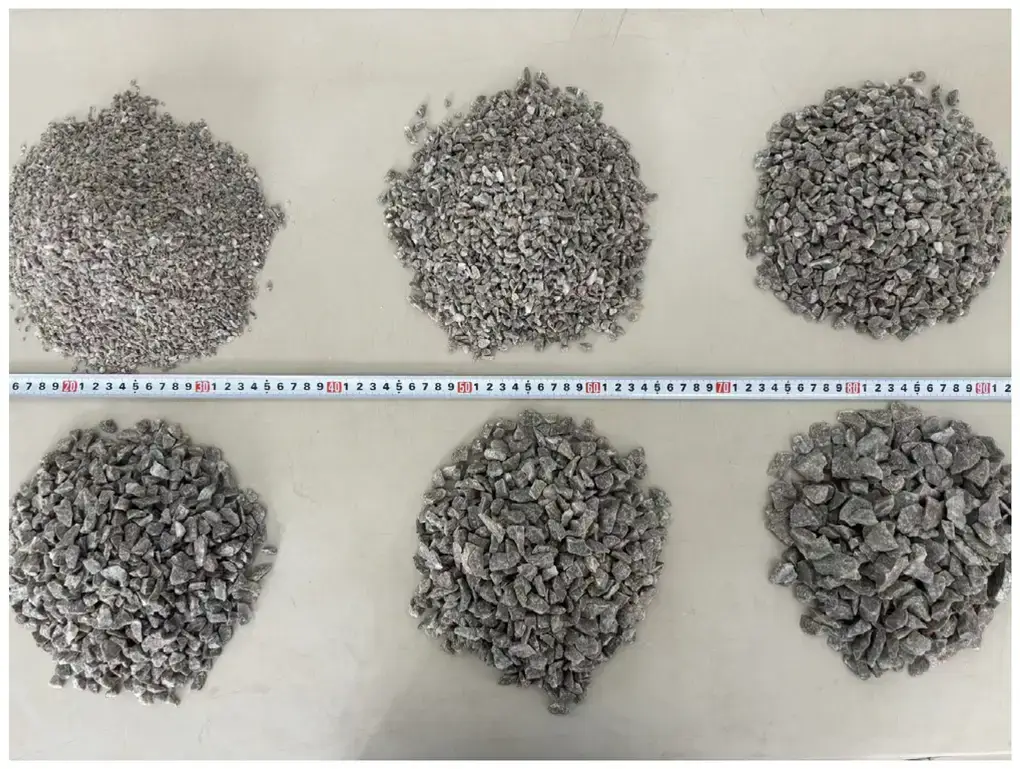
Crushed ore samples illustrate differences in particle-size gradation.
What does “ore stage” mean in ore processing?
In this guide, an ore stage means a distinct step in a plant’s processing route. Examples include feed preparation, crushing, grinding, separation and dewatering. Each step changes the material or prepares it for the next operation. The plant’s flowsheet defines how those steps connect.
What are the main stages of ore processing?
Common stages include preparation, crushing and screening, grinding and classification, mineral separation or metal extraction, and dewatering. A plant may repeat or omit operations according to its feed and product requirements. For example, some iron ore routes need limited treatment, while refractory gold routes may require additional pretreatment.
What is the difference between crushing and grinding?
Crushing reduces large rocks to smaller particles that suit handling or further treatment. Grinding generally produces finer material to improve mineral liberation. Crushers and mills perform different duties, and the required recovery process determines the final particle size. Some processing routes do not need a grinding stage.
What is an ore dressing process?
Ore dressing, or beneficiation, separates valuable minerals from gangue to improve the useful mineral content of a product. Plants may use gravity separation, magnetic separation, flotation or other suitable methods. Testwork establishes which method performs well for the ore. Further chemical extraction may follow where the product route requires it.
Does all gold ore require roasting?
No. Roasting serves selected refractory gold routes. Free-milling ores may respond well to conventional treatment, while other refractory feeds may suit pressure oxidation, biological oxidation or ultra-fine grinding. Engineers use mineralogical studies and recovery tests to select an appropriate route rather than assume that every gold ore needs heat treatment. Метсо
How many crushing stages does an ore processing plant need?
The number depends on feed size, ore properties, required output and downstream needs. Some applications use one stage; others need primary, secondary and tertiary crushing. Screens and oversize return also affect the configuration. Ask suppliers to show a material balance and the final acceptable product rate under your specified operating conditions.